
Author: Dinesh Sonsale

  • The Future of Healthcare: AI-Powered Personalized Treatment Planning for Better Patient Outcomes

    The Future of Healthcare: AI-Powered Personalized Treatment Planning for Better Patient Outcomes

    In today’s fast-evolving healthcare landscape, AI-powered personalized treatment planning is at the forefront of innovation. By leveraging machine learning and predictive analytics in healthcare, medical professionals can now craft treatment plans that are customized to each patient’s unique health profile.

    This not only boosts the efficacy of therapies but also significantly reduces adverse effects—marking a transformative step toward personalized healthcare solutions.

    This blog dives into the practical application of AI in healthcare, particularly in developing predictive models using Python. We’ll explore the benefits, implementation process, key features, and the critical challenges of deploying healthcare AI models.


    How AI Is Shaping Personalized Treatment Planning

    Traditional treatment approaches often follow generalized protocols. In contrast, AI-powered personalized treatment planning analyzes vast and diverse datasets—such as genetics, medical history, lifestyle, and treatment responses—to develop custom treatment strategies for individual patients.

    Key Benefits:

    • Personalized care strategies aligned with individual needs
    • Improved therapeutic outcomes with fewer side effects
    • Faster, data-driven decisions supporting physicians
    • Advancement of precision medicine through AI insights

    These advantages make AI an indispensable tool for organizations building next-generation personalized healthcare solutions.


    Implementing AI Models in Python: A Practical Overview

    Python remains the go-to language for AI development due to its robust ecosystem of libraries. Below is a simple implementation using machine learning for treatment planning with libraries like Scikit-learn and TensorFlow:

    pythonCopyEditimport numpy as np
    import pandas as pd
    import matplotlib.pyplot as plt
    import tensorflow as tf
    from sklearn.model_selection import train_test_split
    from sklearn.ensemble import RandomForestClassifier
    
    # Load and preprocess patient data
    data = pd.read_csv('patient_data.csv')
    
    # Feature and label separation
    X = data.drop('outcome', axis=1)
    y = data['outcome']
    
    # Splitting dataset into training and test sets
    X_train, X_test, y_train, y_test = train_test_split(X, y, test_size=0.2, random_state=42)
    
    # Initialize and train Random Forest model
    model = RandomForestClassifier()
    model.fit(X_train, y_train)
    
    # Evaluate model performance
    accuracy = model.score(X_test, y_test)
    print("Model Accuracy:", accuracy)
    

    This model can be further enhanced by fine-tuning hyperparameters such as n_estimators, max_depth, and min_samples_leaf—a critical step in optimizing AI models for personalized healthcare.


    Key Features, Algorithms, and Parameters

    To make AI-based treatment planning effective, it’s essential to select the right inputs and algorithms:

    Important Features:

    • Genetic markers
    • Medical and treatment history
    • Demographics and lifestyle data
    • Clinical biomarkers

    Recommended Algorithms:

    • Random Forests and Gradient Boosting: Handle complex feature interactions well, ideal for medical data

    Key Parameters:

    • n_estimators: Number of decision trees in the model
    • max_depth: Controls tree depth to avoid overfitting
    • min_samples_leaf: Minimum samples required at a leaf node

    These elements contribute to developing accurate, reliable predictive analytics in healthcare.


    Challenges and Considerations

    While the promise of AI in personalized treatment is vast, several challenges must be addressed:

    1. Model Interpretability

    Most AI models in healthcare operate as black boxes, making it difficult for clinicians to interpret the results and trust the output.

    2. Data Quality and Bias

    AI relies heavily on high-quality data. Inaccurate, incomplete, or biased data can lead to faulty predictions and ineffective custom treatment strategies.

    3. Regulatory and Ethical Constraints

    Any implementation must adhere to data protection laws such as HIPAA and GDPR. Ethical concerns around transparency and accountability also play a major role.

    4. Clinical Workflow Integration

    Successfully embedding AI into clinical practice requires careful planning around usability, staff training, and system interoperability.


    Future Outlook: A New Era in Healthcare Delivery

    As AI continues to evolve, so does its potential in reshaping modern medicine. AI-powered personalized treatment planning is not just a technological innovation—it’s a strategic advancement toward value-based, patient-centric care.

    For healthcare startups, enterprise organizations, and seed-funded innovators, investing in AI is no longer optional. It’s a necessity to stay competitive and relevant in the era of precision medicine.


    Conclusion

    AI-powered personalized treatment planning is revolutionizing healthcare by delivering precise, patient-specific interventions. With the power of machine learning in healthcare, organizations can offer smarter, safer, and more effective treatment plans. However, for these technologies to thrive, it’s crucial to overcome data, trust, and integration challenges.

    Looking to integrate AI into your healthcare platforms?


    At EmbarkingOnVoyage Digital Solutions, we help healthcare enterprises and startups harness the power of AI and data-driven product engineering. Our expert teams build secure, scalable, and compliant solutions tailored to the evolving needs of the healthcare industry.

    Additional Resources: 

  • How AI in Medical Imaging Diagnostics Enhances Accuracy and Early Detection?

    How AI in Medical Imaging Diagnostics Enhances Accuracy and Early Detection?

    The healthcare industry is undergoing a seismic shift, thanks to the integration of AI in medical imaging diagnostics. By combining advanced machine learning algorithms with vast volumes of imaging data, AI is enhancing how radiologists detect, interpret, and respond to complex medical conditions.

    This blog explores how AI-powered diagnostics are reshaping the future of medical image analysis, how these models are built using Python, and the benefits and limitations enterprises must consider before implementation. 

    The Rise of AI-Powered Diagnostics in Radiology 

    Modern diagnostics rely heavily on imaging modalities like X-rays, MRIs, CT scans, and mammograms. Traditionally, radiologists analyze these images manually—a process prone to human error and fatigue.

    AI for medical image analysis addresses these challenges by: 

    • Detecting early-stage diseases and abnormalities 
    • Identifying patterns often missed by the human eye 
    • Accelerating diagnosis and treatment planning 

    By leveraging deep learning in medical imaging, particularly convolutional neural networks (CNNs), AI systems can interpret complex patterns in imaging data with exceptional accuracy and consistency.

    This ensures better outcomes for patients and improved operational efficiency for healthcare providers. 

    How AI Models Are Built for Medical Imaging Diagnostics 

    Developing a successful AI model for medical imaging involves strategic choices in algorithms, features, and parameters.

    Here’s a breakdown of essential components: 

    Key Algorithms 

      • Convolutional Neural Networks (CNNs): Ideal for extracting hierarchical features from image data. 
      • Transfer Learning: Utilizing pre-trained models like VGG or ResNet fine-tuned for medical datasets to reduce training time. 
      • Recurrent Neural Networks (RNNs): Useful for sequential imaging data (e.g., MRI time-series). 
      • Ensemble Methods: Combining models for more robust and reliable predictions. 

      Important Features 

        • Pixel Intensities: Serve as the core data for image interpretation. 
        • Spatial Information: Tumor size, location, and shape enhance the diagnostic context. 
        • Clinical Metadata: Information like patient history, age, or lab results adds critical value to predictions. 
        • Image Preprocessing: Normalization, resizing, and augmentation ensure better generalization. 

        Model Training Parameters 

          • Learning Rate: Controls how quickly the model adjusts. 
          • Batch Size: Number of samples per iteration, influencing memory and training stability. 
          • Number of Layers: Affects depth and complexity of learning. 
          • Dropout Rate: Reduces overfitting by deactivating random neurons. 
          • Kernel Size & Stride: Determines how image features are scanned and extracted. 

          Python Implementation: Building AI Models for Medical Imaging 

          Using Python libraries like TensorFlow, Keras, and OpenCV, enterprises can prototype and scale AI models tailored to medical diagnostics.

          Here’s a simplified workflow: 

          python 

          CopyEdit 

          # Import libraries 
          import numpy as np 
          import pandas as pd 
          import tensorflow as tf 
          from tensorflow.keras.layers import Conv2D, MaxPooling2D, Flatten, Dense 
          from tensorflow.keras.preprocessing.image import ImageDataGenerator 
          from sklearn.model_selection import train_test_split 
           
          # Load dataset 
          data = pd.read_csv(‘medical_imaging_data.csv’) 
           
          # Preprocess and split data 
          X_train, X_test, y_train, y_test = train_test_split(images, labels, test_size=0.2, random_state=42) 
           
          # Build CNN model 
          model = tf.keras.Sequential([ 
             Conv2D(32, (3,3), activation=’relu’, input_shape=(img_height, img_width, 3)), 
             MaxPooling2D((2,2)), 
             Conv2D(64, (3,3), activation=’relu’), 
             MaxPooling2D((2,2)), 
             Conv2D(64, (3,3), activation=’relu’), 
             Flatten(), 
             Dense(64, activation=’relu’), 
             Dense(1, activation=’sigmoid’) 
          ]) 
           
          # Compile and train model 
          model.compile(optimizer=’adam’, loss=’binary_crossentropy’, metrics=[‘accuracy’]) 
          history = model.fit(X_train, y_train, epochs=10, validation_data=(X_test, y_test)) 
           
          # Evaluate performance 
          test_loss, test_acc = model.evaluate(X_test, y_test) 
          print(“Test Accuracy:”, test_acc) 
           

          Challenges in Deploying AI in Medical Imaging Diagnostics 

          Despite the promising advancements, several hurdles must be addressed: 

          • Interpretability: Deep learning models often function as “black boxes,” limiting clinical trust. 
          • Data Quality & Scarcity: Many imaging datasets are either too small or lack proper labeling. 
          • Bias & Generalization Issues: Models trained on biased or homogenous data may fail across diverse patient groups. 
          • Regulatory Compliance: Adhering to standards like HIPAA for data security and patient privacy is non-negotiable. 
          • Workflow Integration: Aligning AI tools with existing Electronic Health Record (EHR) systems is technically complex. 

          Benefits of AI for Medical Image Analysis 

          Despite the challenges, the value of AI in medical imaging diagnostics is undeniable: 

          • Early Detection – Enables timely intervention, improving recovery rates and saving lives 
          • Enhanced Accuracy – Reduces diagnostic errors and ensures consistent results 
          • Operational Efficiency – Speeds up processes, relieving pressure on radiology departments 
          • Personalized Treatment – Helps in tailoring care based on AI-derived insights 
          • Cost Reduction – Minimizes advanced treatment costs through early identification 

          Final Thoughts: The Future of AI-Powered Medical Imaging 

          AI is no longer a futuristic concept—it is a practical, impactful tool in today’s diagnostic landscape. For healthcare organizations and startups looking to innovate, investing in AI-powered diagnostics can yield long-term benefits.

          However, success lies in combining cutting-edge technology with strategic implementation and ethical responsibility. 

          Whether you’re a hospital group, a health-tech startup, or a seed fund company backing innovation in digital health, the right software development partner can make or break your AI initiatives. 

          🚀 Ready to Build AI Solutions for Medical Imaging? 

          EmbarkingOnVoyage Digital Solutions specializes in data and product engineering for enterprise companies, startups, and ISVs in healthcare. We build scalable, secure AI-driven platforms for diagnostics, imaging, and beyond—so you can focus on delivering better patient outcomes. 

          Additional Resources: 

        1. How Predictive Analytics in Travel Planning Drives Better Customer Experiences? 

          How Predictive Analytics in Travel Planning Drives Better Customer Experiences? 

          In today’s competitive and rapidly evolving travel industry, companies are increasingly turning to technology to improve customer experiences and streamline operations. One innovation that’s redefining the way travel businesses plan and deliver services is predictive analytics in travel planning.

          By combining artificial intelligence (AI) and machine learning, predictive analytics empowers organizations to anticipate customer behavior, optimize resources, and deliver highly personalized travel experiences. In this blog, we’ll explore how travel companies can implement predictive analytics using Python, the key algorithms involved, and the benefits and limitations of adopting this data-driven approach.


          What Is Predictive Analytics in Travel Planning?

          Predictive analytics in travel planning involves the use of historical data, real-time inputs, and AI algorithms to forecast future travel trends and customer behavior. It allows travel companies to anticipate demand, manage pricing strategies, and plan logistics more efficiently.

          Key data sources include:

          • Past booking data and user preferences
          • Weather forecasts
          • Seasonal trends and holidays
          • Economic indicators
          • Geolocation and proximity to points of interest

          With this information, organizations can improve itinerary planning, reduce operational risks, and enhance customer satisfaction through tailored recommendations and proactive service delivery.


          Core Algorithms for Travel Prediction Models

          The success of AI in travel planning depends largely on selecting the right algorithms. Below are commonly used models in predictive travel systems:

          • Linear Regression: Ideal for predicting continuous variables like hotel pricing or flight demand.
          • Random Forest: Suitable for handling large, complex datasets with non-linear relationships.
          • Gradient Boosting Machines (GBM): Offers high accuracy and is effective in ranking and scoring predictions.
          • LSTM Networks (Long Short-Term Memory): Especially useful for time series data such as seasonal demand forecasting.

          These predictive models for travel help convert raw data into actionable insights that drive smarter business decisions.


          Key Features for Travel Prediction

          Developing a robust predictive system requires the inclusion of relevant features. Here are some common variables used:

          • Historical Travel Data: Booking patterns, travel history, demographics
          • Weather Conditions: Real-time and forecasted data
          • Seasonality: Holiday seasons, events, and peak/off-peak travel cycles
          • Geospatial Information: Location-based data related to attractions, airports, hotels
          • Economic Indicators: GDP, exchange rates, inflation trends

          By incorporating these elements, companies can achieve better accuracy in forecasting demand and planning operations.


          Important Parameters for Model Training

          Fine-tuning predictive models involves adjusting parameters such as:

          • Number of Trees (Random Forest): Controls model complexity and generalization
          • Learning Rate (GBM): Influences convergence speed and performance
          • Maximum Depth (Decision Trees): Prevents overfitting
          • Batch Size and Dropout Rate (LSTM): Impacts memory efficiency and model robustness

          Through techniques like hyperparameter tuning and cross-validation, developers can enhance the reliability and efficiency of their models.


          Implementation Example Using Python

          Below is a simplified example using Python, demonstrating how travel companies can implement predictive analytics with commonly used libraries like scikit-learn and TensorFlow.

          pythonCopyEditimport pandas as pd
          from sklearn.model_selection import train_test_split
          from sklearn.ensemble import RandomForestRegressor
          import tensorflow as tf
          
          # Load dataset
          data = pd.read_csv('travel_data.csv')
          
          # Data preprocessing: Assume 'features' and 'labels' are already prepared
          X_train, X_test, y_train, y_test = train_test_split(features, labels, test_size=0.2, random_state=42)
          
          # Train Random Forest model
          rf_model = RandomForestRegressor()
          rf_model.fit(X_train, y_train)
          print("Random Forest Score:", rf_model.score(X_test, y_test))
          
          # Deep learning model with TensorFlow
          model = tf.keras.Sequential([
              tf.keras.layers.Dense(64, activation='relu', input_shape=(num_features,)),
              tf.keras.layers.Dense(64, activation='relu'),
              tf.keras.layers.Dense(1)
          ])
          
          model.compile(optimizer='adam', loss='mse', metrics=['mae'])
          model.fit(X_train, y_train, epochs=100, validation_split=0.2)
          
          # Evaluate model
          loss, mae = model.evaluate(X_test, y_test)
          print("Neural Network Loss:", loss)
          print("MAE:", mae)
          

          Benefits of Predictive Analytics in Travel

          • Optimized Resource Allocation: Better planning of inventory, workforce, and logistics.
          • Enhanced Customer Experience: Tailored offers and proactive communication reduce disruptions.
          • Increased Profitability: More accurate demand forecasting improves pricing strategies and operational efficiency.
          • Data-Driven Decision Making: Minimizes guesswork and reduces business risks.

          Limitations and Considerations

          Despite its advantages, predictive analytics for travel has some limitations:

          • Dependence on Historical Data: May not adapt well to sudden market changes or unprecedented events.
          • Data Quality Issues: Inaccurate or incomplete data can skew results.
          • External Disruptions: Natural disasters, political instability, or pandemics are difficult to predict.

          Companies must regularly update their models and include real-time data streams to remain agile and relevant.


          Final Thoughts

          As customer expectations and travel patterns continue to evolve, predictive analytics in travel planning is becoming essential for businesses aiming to stay ahead. From personalized recommendations to smarter pricing strategies, this approach empowers companies to transform data into competitive advantage.

          For enterprises, startups, and seed-funded companies seeking to build scalable, AI-powered travel solutions, implementing predictive models with tools like Python, TensorFlow, and scikit-learn opens up a world of possibilities.

          Additional Resources: 

        2. How AI-Powered Travel Chatbots Are Revolutionizing Customer Experience?

          How AI-Powered Travel Chatbots Are Revolutionizing Customer Experience?

          In today’s fast-paced travel industry, exceptional customer service is no longer a luxury but a necessity.  

          With travelers expecting instant responses and seamless experiences, AI-powered travel chatbots have emerged as a game-changing solution for travel companies.  

          These intelligent systems leverage natural language processing (NLP) and machine learning (ML) to handle customer inquiries efficiently, reducing response times and enhancing overall satisfaction. 

          In this blog, we’ll explore how AI-powered travel chatbots are transforming the travel industry and provide a step-by-step guide to implementing one using Python. 

          How AI-Powered Travel Chatbots are Transforming Customer Service?

          1. Instant Customer Support 

          AI chatbots for travel businesses provide 24/7 assistance, responding instantly to traveler inquiries, whether it’s about flight bookings, hotel reservations, or itinerary modifications. Unlike human agents, travel AI chatbots do not require breaks, ensuring round-the-clock service. 

          2. Personalized Interactions 

          With machine learning algorithms, travel industry chatbots analyze past interactions to offer personalized recommendations. Whether suggesting travel destinations or helping with rebooking, chatbot solutions for travel enhance user experience by tailoring responses to individual travelers. 

          3. Efficient Query Handling 

          From booking inquiries to cancellation requests, AI-powered travel chatbots can handle a wide range of customer service tasks. They can guide users through self-service options or escalate complex issues to human agents when necessary. 

          4. Cost and Resource Optimization 

          By automating repetitive queries, travel chatbot solutions help companies reduce operational costs and allow human customer service representatives to focus on high-value tasks, such as handling unique customer concerns or crisis management. 

          Implementing an AI-Powered Travel Chatbot Using Python 

          Now, let’s look at a basic implementation of an AI chatbot for travel businesses using Python. We will utilize NLTK (Natural Language Toolkit) to process user inputs and provide relevant responses. 

          Step 1: Install Required Libraries 

          Before coding, install NLTK if you haven’t already: 

          pip install nltk 

          Step 2: Import Necessary Libraries 

          import nltk 
          from nltk.chat.util import Chat, reflections 

          Step 3: Define Chatbot Responses 

          # Define chatbot response patterns 
          pairs = [ 
             [‘(hi|hello|hey)’, [‘Hello!’, ‘Hi there!’, ‘Hey!’]], 
             [‘how are you?’, [‘I am good, thank you.’, ‘I am doing well.’, ‘All is well.’]], 
             [‘(.*) your name?’, [‘My name is TravelBot.’, ‘You can call me TravelBot.’]], 
             [‘(.*) help (.*)’, [‘Sure, I can assist you with that.’, ‘Of course, I am here to help.’]], 
             [‘(.*) (book|booked|booking) (.*)’, [‘Please provide me with your booking details.’]], 
             [‘(.*) (cancel|canceled|cancellation) (.*)’, [‘To cancel your booking, please contact customer service.’]], 
             [‘(.*) (thank you|thanks)’, [‘You are welcome!’, ‘Glad I could assist!’, ‘Anytime!’]] 

          Step 4: Initialize and Start the Chatbot 

          # Initialize chatbot 
          chatbot = Chat(pairs, reflections) 
           
          print(“Welcome to TravelBot. How can I assist you today?”) 
          while True: 
             user_input = input(“You: “) 
             response = chatbot.respond(user_input) 
             print(“TravelBot:”, response) 

          This is a rule-based chatbot, which can be further enhanced with machine learning and deep learning models for more sophisticated responses. 

          Challenges and Limitations of AI-Powered Travel Chatbots 

          While AI-powered travel chatbots offer numerous benefits, they also come with challenges that travel businesses must address: 

          • Dependency on Training Data: Chatbots require large datasets to understand and respond accurately. Insufficient or poor-quality training data can lead to ineffective interactions. 
          • Limited Emotional Intelligence: Unlike human agents, chatbots for travel may struggle with understanding emotions, which can impact the quality of interactions in sensitive situations. 
          • Handling Complex Queries: Unstructured or highly complex queries might be challenging for travel chatbot solutions to process without human intervention. 
          • Continuous Improvement Required: AI chatbots need regular updates and retraining to stay relevant as customer preferences and travel regulations evolve. 

          Conclusion 

          AI-powered travel chatbots are revolutionizing customer service in the travel industry by offering instant responses, personalized interactions, and cost-efficient query handling. While challenges exist, continuous advancements in AI are making travel chatbot solutions more intelligent and effective. 

          For travel businesses, integrating AI-powered travel chatbots is no longer an option—it’s a strategic necessity to enhance customer experience and remain competitive in a rapidly evolving industry. 

          Additional Resources: 

        3. How Can AI Optimize Travel Revenue with Dynamic Pricing?

          How Can AI Optimize Travel Revenue with Dynamic Pricing?

          In today’s competitive travel industry, maximizing revenue while satisfying customer demands is paramount.  

          Dynamic Pricing: A Strategic Approach with AI in Travel

          Dynamic pricing, powered by AI in travel, offers a strategic approach for travel companies to achieve this balance.  

          By leveraging AI in travel, providers can optimize pricing strategies in real-time, considering various factors such as demand, seasonality, competitor pricing, and historical booking patterns. 

          Exploring Dynamic Pricing and Revenue Management with AI

          Exploring Dynamic Pricing and Revenue Management with AI

          In this blog, we’ll delve into the implementation of dynamic pricing and revenue management using AI models in Python.  

          AI algorithms enable travel companies to optimize pricing strategies in real-time based on factors such as demand, seasonality, competitor pricing, and historical booking patterns.  

          By dynamically adjusting prices, travel providers can maximize revenue while offering competitive prices to travelers, leading to improved profitability and customer satisfaction. 

          Implementing Dynamic Pricing with Python: Step-by-Step

          Now, let’s dive into the implementation of dynamic pricing and revenue management using Python. We’ll use machine learning libraries such as pandas, scikit-learn, and TensorFlow to build and train our AI model. 

          Implementing Dynamic Pricing with Python: Step-by-Step
          Implementing Dynamic Pricing with Python: Step-by-Step

          Dynamic pricing and revenue management are critical components of a successful travel business.  

          Real-Time Optimization with AI in Travel

          Real-Time Optimization with AI in Travel

          By harnessing the power of AI in travel and machine learning, travel companies can optimize pricing strategies in real-time, maximizing revenue while offering competitive prices to travelers.  

          In this blog, we’ve explored the implementation of dynamic pricing using Python, highlighting the use of machine learning algorithms to analyze historical booking data and make informed pricing decisions.

          Why Embracing AI-Driven Dynamic Pricing Matters?  

          Why Embracing AI-Driven Dynamic Pricing Matters  

          Embracing dynamic pricing with AI in travel can lead to improved profitability and customer satisfaction in the competitive travel industry. 

          How could implementing AI-driven dynamic pricing transform your travel business?

          Additional Resources: 

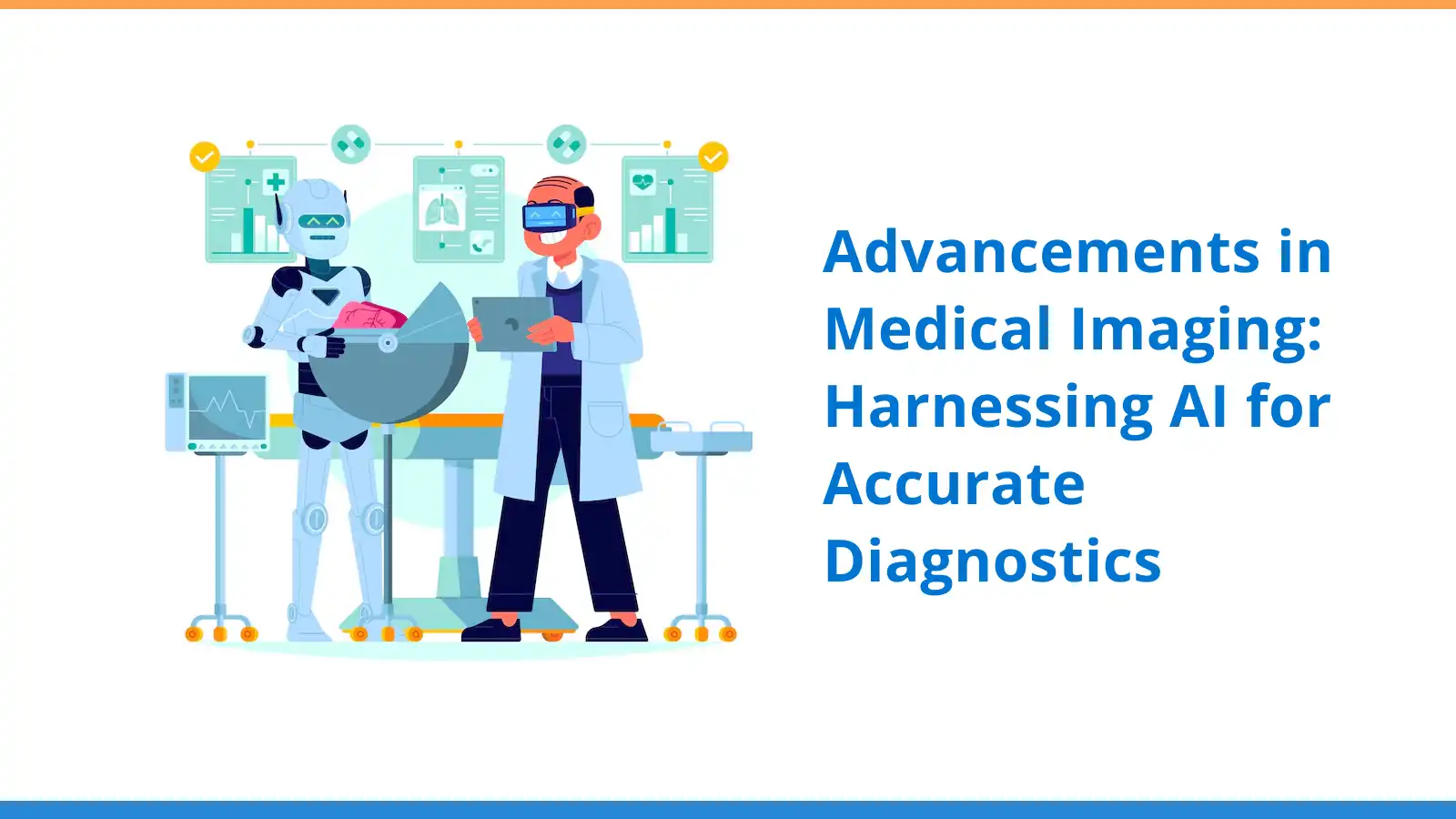
        4. Advancements in Medical Imaging: Harnessing AI for Accurate Diagnostics 

          Advancements in Medical Imaging: Harnessing AI for Accurate Diagnostics 

          In the realm of healthcare, the integration of AI-powered algorithms with medical imaging has ushered in a new era of diagnostics. These cutting-edge technologies are transforming the way radiologists interpret images, leading to more precise and efficient disease detection.

          In this blog, we’ll explore the implementation of AI models for medical imaging and diagnostics using Python, highlighting their significance and addressing potential limitations. 

          AI Revolutionizes Medical Imaging Interpretation 

          AI Revolutionizes Medical Imaging Interpretation 

          AI-powered algorithms are revolutionizing medical imaging interpretation by assisting radiologists in detecting and diagnosing diseases more accurately and efficiently.

          From detecting abnormalities in X-rays and MRIs to identifying cancerous lesions in mammograms, AI models analyze complex image data with remarkable precision, enabling early detection and intervention for improved patient outcomes. 

          Empowering Diagnostics with AI in Medical Imaging 

          Empowering Diagnostics with AI in Medical Imaging 

          AI in medical imaging is revolutionizing interpretation by assisting radiologists in detecting and diagnosing diseases with unprecedented accuracy and efficiency. Through the analysis of complex image data, AI models can detect abnormalities in various modalities, including X-rays, MRIs, CT scans, and mammograms.

          These algorithms leverage advanced machine learning and deep learning techniques to identify subtle patterns and anomalies that human observers may overlook. By enabling early detection and intervention, AI-powered diagnostics hold the potential to improve patient outcomes and reduce healthcare costs significantly. 

          Implementation of AI Models for Medical Imaging and Diagnostics 

          Implementation of AI Models for Medical Imaging and Diagnostics 

          When implementing AI models for medical imaging and diagnostics, the choice of algorithm, features, and parameters and understanding the associated challenges and advantages are crucial for successful deployment. Let’s delve into each aspect: 

          Algorithms: 

          • Convolutional Neural Networks (CNNs): Widely used for image analysis tasks due to their ability to automatically learn hierarchical features from raw pixel data in medical imaging
          • Transfer Learning: Pre-trained CNN models (e.g., VGG, ResNet) can be fine-tuned on medical imaging datasets to leverage learned features and improve performance. 
          • Recurrent Neural Networks (RNNs): Suitable for sequential data processing in modalities such as MRI or CT scans, where temporal dependencies exist in medical imaging
          • Ensemble Methods: Combining multiple models, such as CNNs and RNNs, can enhance predictive performance and robustness in medical imaging analysis
          • Features: 
          • Pixel Intensities: Raw pixel values extracted from medical images serve as input features for the model. 
          • Spatial Information: Location-based features, such as tumour size and shape, are crucial for accurate diagnosis in medical imaging
          • Clinical Metadata: Patient demographics, medical history, and laboratory results provide contextual information for improved prediction in medical imaging diagnostics
          • Image Preprocessing: Techniques like normalization, resizing, and augmentation enhance model performance and generalization in medical imaging applications
          • Training Parameters: 
          • Learning Rate: Controls the step size during model optimization and affects convergence speed in AI for medical imaging
          • Batch Size: Specifies the number of samples processed in each training iteration. 
          • Number of Layers: Determines the depth of the neural network architecture, influencing model complexity and capacity to capture intricate patterns in medical imaging analysis
          • Dropout Rate: Regularization parameter that prevents overfitting by randomly deactivating neurons during training in AI for medical imaging
          • Kernel Size and Stride: Parameters in CNNs that define the size and movement of convolutional filters, impacting feature extraction in medical imaging diagnostics

          Challenges in AI for Medical Imaging 

          Challenges in AI for Medical Imaging 

          AI in medical imaging faces certain limitations: 

          • Interpretability: Deep learning models often operate as black boxes, making it challenging for clinicians to understand the rationale behind their decisions. This lack of interpretability may raise concerns regarding trust and accountability in clinical settings. 
          • Data Quality: Limited availability of labelled medical imaging data and data quality issues, such as noise and artifacts, can hinder model performance. 
          • Bias and Generalization: AI models may exhibit bias or generalization issues if trained on imbalanced or insufficient data, leading to inaccurate or unreliable predictions in medical imaging analysis
          • Regulatory Compliance: Healthcare regulations, such as HIPAA, impose stringent requirements for patient privacy and data security in AI for medical imaging
          • Integration with Clinical Workflow: Seamless integration of AI models into clinical workflows and electronic health record systems poses logistical and interoperability challenges in medical imaging diagnostics

          Advantages of Auto-detection are 

          Advantages of Auto-detection

          1. Early Detection: AI models enable early detection of diseases and abnormalities, facilitating timely interventions and improved patient outcomes. 
          2. Efficiency: Automated image analysis speeds up diagnosis and reduces the burden on healthcare professionals, leading to faster turnaround times. 
          3. Accuracy: AI-powered diagnostics offer high accuracy and consistency, minimizing errors and variability in interpretation. 
          4. Personalized Medicine: Tailored treatment plans based on AI-generated insights enhance patient care and optimize resource allocation. 
          5. Cost Savings: Early detection and intervention reduce healthcare costs associated with advanced disease stages and unnecessary procedures.  

          Let’s explore how we can implement AI models for medical imaging and diagnostics using Python. We’ll utilize popular libraries such as TensorFlow, Keras, and OpenCV to build and train our image analysis models.  

          # Import necessary libraries  

          import numpy as np  

          import pandas as pd  

          import matplotlib.pyplot as plt  

          import tensorflow as tf  

          from tensorflow.keras.layers import Conv2D, MaxPooling2D, Flatten, Dense  

          from tensorflow.keras.preprocessing.image import ImageDataGenerator  

          from sklearn.model_selection import train_test_split  

          # Load and preprocess medical imaging data  

          # (e.g., X-rays, MRIs, CT scans)  

          data = pd.read_csv(‘medical_imaging_data.csv’)  

          # Preprocess data (resize images, normalize pixel values, etc.)  

          # Split data into training and testing sets  

          X_train, X_test, y_train, y_test = train_test_split(images, labels, test_size=0.2, random_state=42)  

          # Define convolutional neural network (CNN) architecture  

          model = tf.keras.Sequential([  

          Conv2D(32, (3, 3), activation=’relu’, input_shape=(img_height, img_width, 3)),  

          MaxPooling2D((2, 2)),  

          Conv2D(64, (3, 3), activation=’relu’),  

          MaxPooling2D((2, 2)),  

          Conv2D(64, (3, 3), activation=’relu’),  

            Flatten(),  

            Dense(64, activation=’relu’),  

            Dense(1, activation=’sigmoid’)  

          ])  

          # Compile and train the CNN model  

          model.compile(optimizer=’adam’, loss=’binary_crossentropy’, metrics=[‘accuracy’])  

          history = model.fit(X_train, y_train, epochs=10, validation_data=(X_test, y_test))  

          # Evaluate model performance  

          test_loss, test_acc = model.evaluate(X_test, y_test)  

          print(“Test Accuracy:”, test_acc)  

          While AI-powered algorithms offer significant advancements in medical imaging and diagnostics, they also have certain limitations. One notable limitation is interpretability.  

          Deep learning models often operate as black boxes, making it challenging for clinicians to understand the rationale behind their decisions. This lack of interpretability may raise concerns regarding trust and accountability in clinical settings.  

          Additionally, AI models may exhibit bias or generalization issues if trained on imbalanced or insufficient data, leading to inaccurate or unreliable predictions.  

          Furthermore, the deployment of AI algorithms in healthcare requires compliance with regulatory standards and ethical considerations, including patient privacy and data security.  

          Despite these challenges, ongoing research and advancements in AI hold promise for addressing these limitations and unlocking the full potential of medical imaging in improving patient care. 

          Additional Resources: