



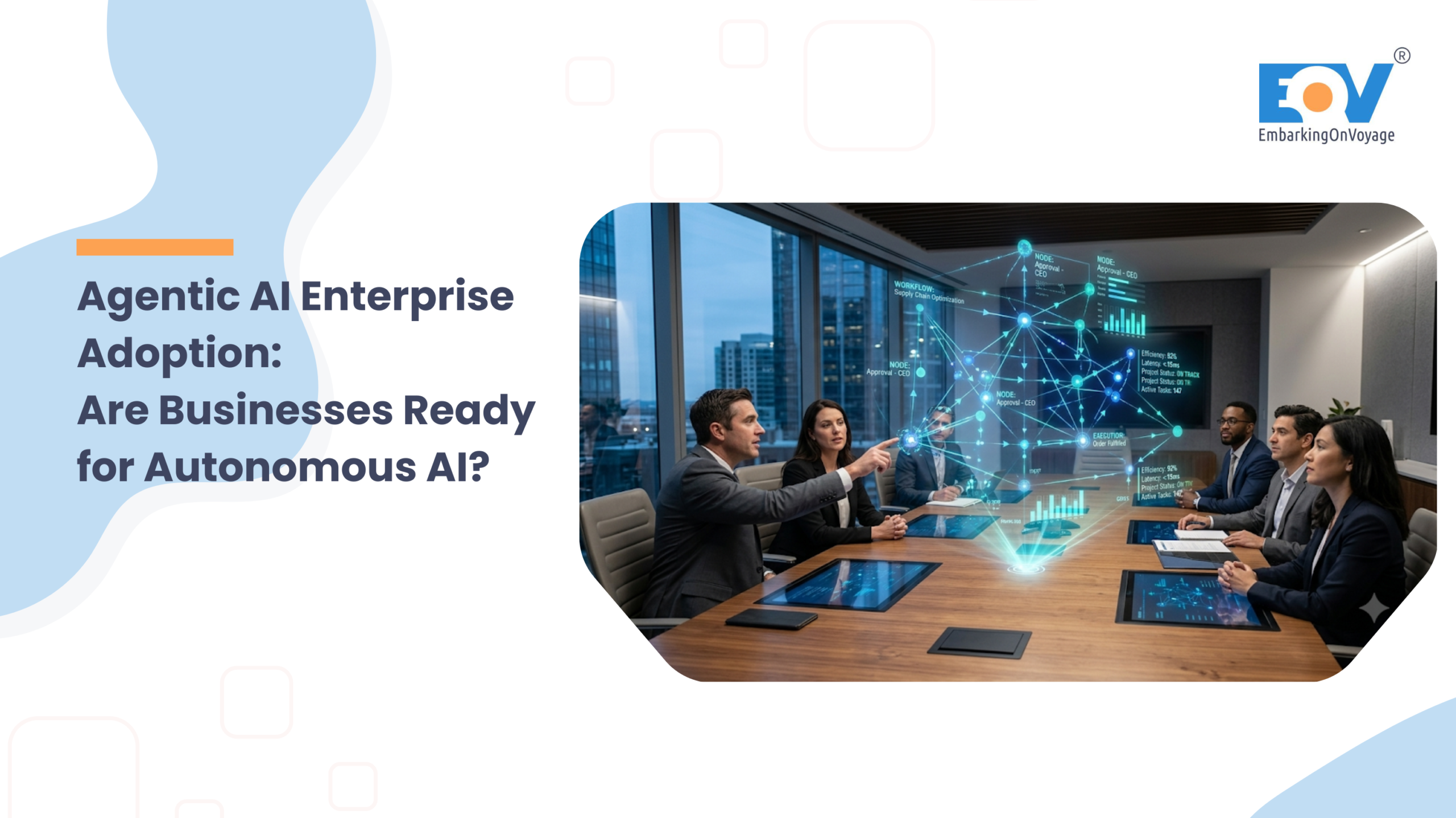
Agentic AI enterprise adoption is no longer just a futuristic concept; it is the next critical phase of digital transformation. For the past three years, enterprise conversations have revolved around Generative AI. Organizations invested heavily in copilots, chatbots, and summarization tools to accelerate knowledge work. Yet, a critical question remains: Have these investments fundamentally transformed how enterprises operate? For many, the answer is still no.
The next phase of enterprise transformation is no longer about AI generating outputs; it is about AI executing work. Welcome to the era of Agentic AI autonomous software systems capable of observing, reasoning, making decisions, and executing actions within defined governance.
While the technology is advancing rapidly, enterprise readiness remains uneven across major hubs like Germany, the Netherlands, the UK, and the US. The question is no longer whether autonomous AI will enter operations, but whether leaders are prepared to adopt it responsibly.
From Intelligence to Execution: The Agentic Shift
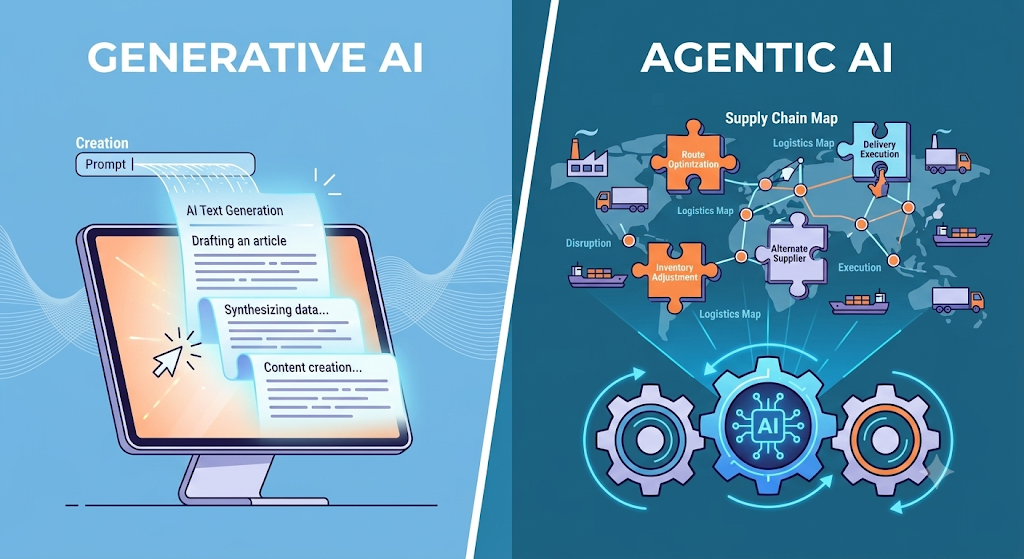
Traditional AI focused on prediction; Generative AI expanded into content creation. Agentic AI moves beyond both by focusing entirely on outcomes rather than prompts.
Generative AI  ➡️  Creates Information
Agentic AI     ➡️  Creates Outcomes
Instead of simply flagging a supply chain disruption, an autonomous agent can evaluate alternative suppliers, coordinate with procurement, initiate approvals, and update stakeholders—all while maintaining human oversight. For CXOs, this shift matters because business value is measured by revenue growth, operational efficiency, and reduced risk not by the number of prompts executed.
Bridging the Enterprise Readiness Gap
Despite growing enthusiasm, massive hurdles prevent seamless Agentic AI enterprise adoption:
- Fragmented Data: Autonomous systems rely on connected, governed data. Disconnected platforms make autonomous decisions unreliable.
- Process Maturity: Many workflows rely on undocumented exceptions. Processes must be standardized and digitized before AI can execute them.
- Governance Frameworks: Agentic AI operates within defined boundaries. Organizations need frameworks defining authority, escalation paths, and audit trails. For businesses looking to scale their infrastructure, implementing custom digital product engineering frameworks provides a solid foundation for cross-functional automation.
- Organizational Change: Successful adoption requires leadership alignment and a willingness to redesign operating models rather than just digitizing old processes.
Agentic AI in Action: Travel, Healthcare, and Retail
The power of autonomous execution is already reshaping key verticals:
1. Autonomous Travel Operations
Modern booking engines are transactional. An autonomous travel platform instantly detects a canceled flight, evaluates alternatives, books hotel accommodations, and reallocates itinerary components within traveler preferences—solving the disruption before the customer even contacts support.
2. Intelligent Healthcare Coordination
Healthcare administrative workflows consume massive organizational effort. Agentic AI can seamlessly orchestrate clinical documentation, insurance verification, operating theater scheduling, and discharge planning while strictly adhering to clinical governance.
3. Autonomous Commerce in Retail
Instead of just recommending products, autonomous agents continuously evaluate inventory, pricing strategies, and customer behavior to dynamically personalize offers and coordinate fulfillment, maximizing long-term customer value.
Why Governance is Your Ultimate Competitive Advantage
As enterprises deploy autonomous systems, the debate must shift from whether AI can make decisions to how those decisions are governed.
“Trust is built not by removing humans from decision-making, but by ensuring that autonomous systems operate transparently, consistently, and within well-defined enterprise policies.”
Establishing clear decision boundaries, explainability standards, and continuous monitoring turns governance from a regulatory burden into a strict competitive advantage. This is especially vital for companies aligning their architectures with modern frameworks like the official EU AI Act compliance guidelines, which mandate rigorous risk management for autonomous software.
Redesigning the Future Enterprise
The organizations leading the next decade won’t necessarily be those with the largest budgets, but those that successfully integrate autonomous execution into everyday workflows.
Boards must look past technical metrics like chatbot usage and focus strictly on tangible business outcomes: reduced operating costs, faster issue resolution, and shorter procurement cycles. Our dedicated team at EOV Digital specializes in turning these operational frictions into seamless, automated value drivers. The future belongs to leaders who enable AI to execute responsibly, measure outcomes rigorously, and build an adaptable, autonomous enterprise.
About the Author
Abhishek Nag is the CEO & Founder of EOV Digital, an AI-native digital product engineering company. EOV partners with enterprise leaders across India, the US, and Europe to build production-grade Agentic AI systems that autonomously execute business workflows and deliver measurable business value.
Leave a Reply