


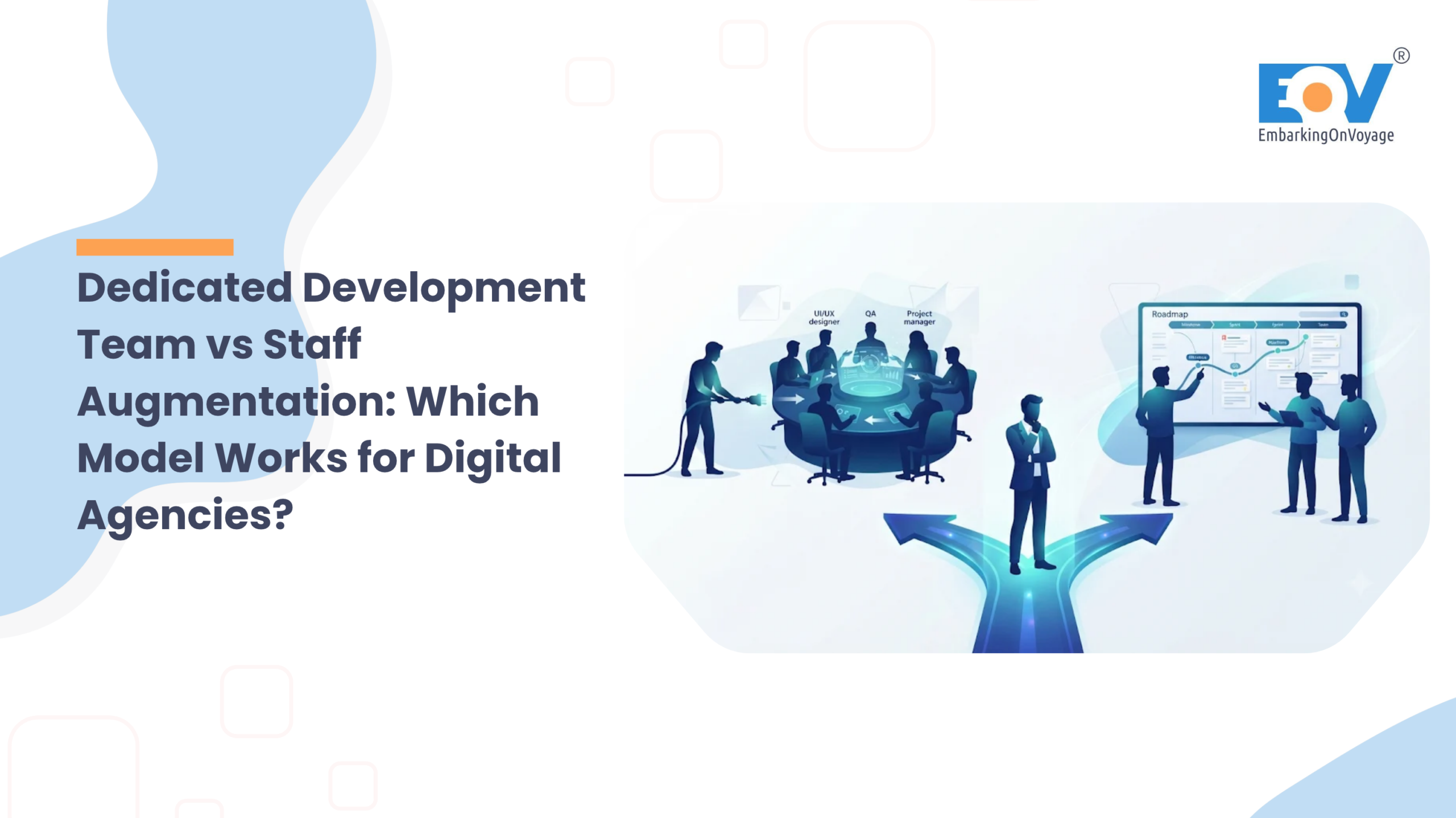
Choosing between a dedicated development team vs staff augmentation is one of those decisions that looks simple on paper and gets complicated the moment real client deadlines are involved. You’ve just won a big project, or you’re stepping into a new service line, and your in-house team simply doesn’t have the capacity to deliver. Hiring takes months. The client wants a kickoff date this month.
So you look outside. And you quickly find two common options that sound similar but solve very different problems.
In this guide, we’ll walk through how each model works, where each one shines, where each one struggles, and how a digital agency can decide without guessing. We’ll also look at a third option that more agencies are exploring.
Quick Answer: Which Model Should You Pick?
If you’re short on time, here’s the honest short version:
- Choose staff augmentation when you need specific skills, you already have strong technical leadership, and your managers have the time to direct the work.
- Choose a dedicated development team when the work is ongoing, several roles need to collaborate, and you want continuity and shared knowledge to build up over time.
- Consider product co-development when you need both execution capacity and engineering expertise, with clear responsibilities on each side.
The right answer depends on your real bottleneck, not on which label sounds more impressive. Let’s unpack that.
What Is Staff Augmentation?
Staff augmentation means bringing external professionals into your existing team to fill a specific skill or capacity gap. Think of it as borrowing talent, not outsourcing a project.
For example, an agency might need two .NET developers for a client application, a mobile engineer for a few months, or a specialist to support a cloud migration. These people join your workflow, attend your stand-ups, and work under your direction.
In most cases, your agency keeps responsibility for task assignment, priorities, day-to-day supervision, and overall delivery.
Advantages of Staff Augmentation
- Direct control: Your managers assign work and coordinate external developers using processes your team already knows.
- Targeted skills: You fill one specific gap without paying for a full team you don’t need.
- Potentially faster integration: Experienced professionals can slot into an existing delivery structure when requirements and onboarding are clear.
- Flexible capacity: You may be able to scale external participation up or down as needs change, subject to contract terms and availability.
Where Staff Augmentation Can Struggle
Here’s the part that often gets skipped in sales conversations. Staff augmentation does not automatically bring technical leadership or end-to-end ownership of delivery.
If your agency doesn’t have a capable technical lead, product owner, or project manager, adding more individual developers can actually increase coordination work instead of reducing it. The model works best when requirements are clear, engineering practices are established, and your managers have real capacity to guide people.
What Is a Dedicated Development Team?
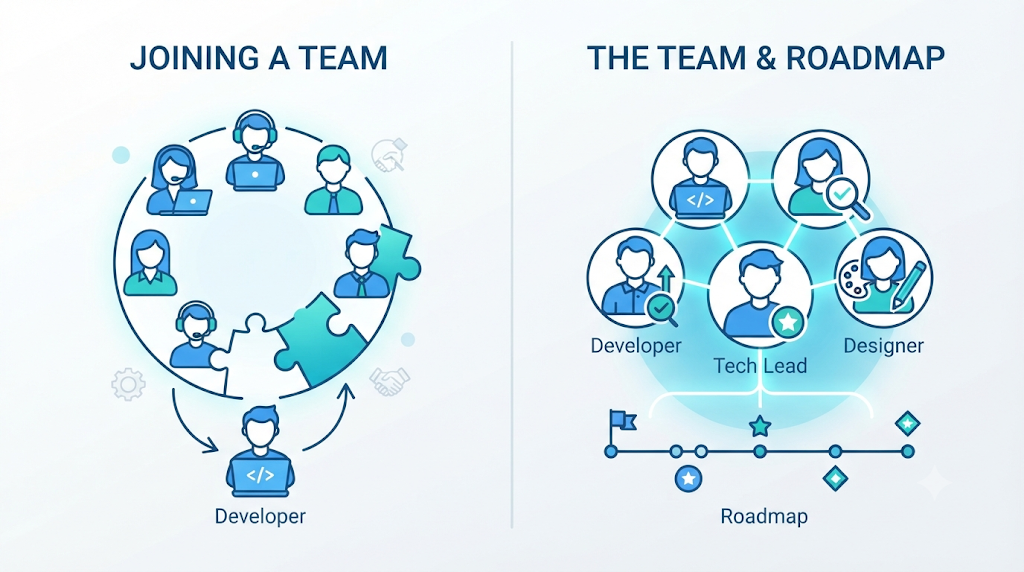
A dedicated development team is a group of professionals assigned to your product or development stream for an agreed period. Depending on the engagement, that might include developers, QA engineers, technical leadership, and other specialists.
The team can work alongside your internal staff, or it can take responsibility for a defined area of product development. Either way, the exact responsibilities depend on the contract. A team is not automatically accountable for business outcomes just because it is a team rather than a group of individuals.
Advantages of a Dedicated Development Team
- Continuity: Members build knowledge of your product, architecture, and business context over time, so you stop re-explaining the basics.
- Shared working practices: The team can set consistent engineering, testing, and documentation standards.
- Coordinated capacity: A group can handle interdependent work together instead of acting as separate resources. (This echoes a long-standing idea in software, Conway’s Law, which says system design tends to mirror the communication structure of the team that builds it.)
- Roadmap support: It suits ongoing development where priorities evolve across several releases.
- Stronger collaboration: With the right technical leadership in the engagement, the team can contribute to planning, estimation, and architecture.
Where a Dedicated Team Can Struggle
A dedicated team needs enough ongoing work to justify the commitment. Onboarding, governance, and communication still take effort. And if your agency can’t define priorities or make product decisions on time, even a brilliant team will stall.
In short, the team should match your workload, your roadmap, and your management structure.
Dedicated Development Team vs Staff Augmentation: Key Differences
Here’s a side-by-side look at how the two models usually compare. These are common patterns, not universal rules, because providers structure engagements differently. The contract matters more than the label.
| Consideration | Staff augmentation | Dedicated development team |
|---|---|---|
| Primary purpose | Fill specific skills or capacity gaps | Provide coordinated, ongoing engineering capacity |
| Team structure | Individual professionals joining your team | A group working together on a defined product or stream |
| Day-to-day management | Usually led by the agency | Depends on the agreed operating model |
| Technical leadership | Typically supplied by the agency | May be included, depending on scope |
| Continuity | Depends on individual assignments and retention | Can build continuity across the team |
| Best suited to | Specific roles or short-term gaps | Sustained development and evolving roadmaps |
| Commercial approach | Often based on individual rates and time | Often based on team capacity or a defined engagement |
| Delivery accountability | Usually remains primarily with the agency | Can be shared or assigned for defined deliverables if agreed |
Which Model Is More Cost-Effective?
There’s no universal winner, and anyone who tells you otherwise is probably selling something.
Staff augmentation can be economical when you need one specialist, already have strong internal leadership, and can integrate that person efficiently. A dedicated team may offer better overall value when several roles need to collaborate constantly and the work depends on deep product knowledge.
The smarter move is to compare the total cost of delivery, not just the price of one developer. Include management overhead, onboarding time, technical leadership, testing, coordination, continuity, and the cost of delays. A low hourly rate doesn’t always mean a low project cost.
Also think about how predictable your workload is. A dedicated team is hard to justify when demand comes in waves. On the other hand, repeatedly assembling individual contractors for continuous work can quietly become inefficient.
5 Questions to Help You Choose the Right Model
Instead of debating labels, ask yourself these five practical questions.
1. Do You Have Internal Technical Leadership?
If your agency already has a capable technical lead who can assign work and review code, staff augmentation may be enough. If you need a coordinated group with additional technical leadership, a dedicated team is likely a better match.
2. Is the Work Temporary or Continuous?
A short-term skills gap points toward staff augmentation. An ongoing product roadmap benefits more from a team that keeps knowledge and works together over time.
3. How Much Management Capacity Do You Have?
External developers still need onboarding, clear priorities, and regular feedback. If your managers are already stretched, ask whether a coordinated delivery arrangement would reduce fragmentation, or whether you first need to tighten your own governance. Frameworks like the Scrum Guide are a useful reference for setting clear roles and cadences before bringing anyone new in.
4. Who Should Own Delivery Commitments?
If you want to direct every task and keep full responsibility for delivery, staff augmentation fits. If you’d rather have a partner take responsibility for an agreed workstream or specific deliverables, look at a dedicated team or a product co-development arrangement with explicit accountability.
5. How Stable Is Your Project Pipeline?
A steady stream of work can support a dedicated team. Highly variable demand needs more flexibility. Whatever you choose, check minimum commitments, notice periods, scaling terms, and what happens when a client changes priorities. Guidance from the Project Management Institute can help you think through resourcing and risk before you sign.
A Third Option: Product Co-Development
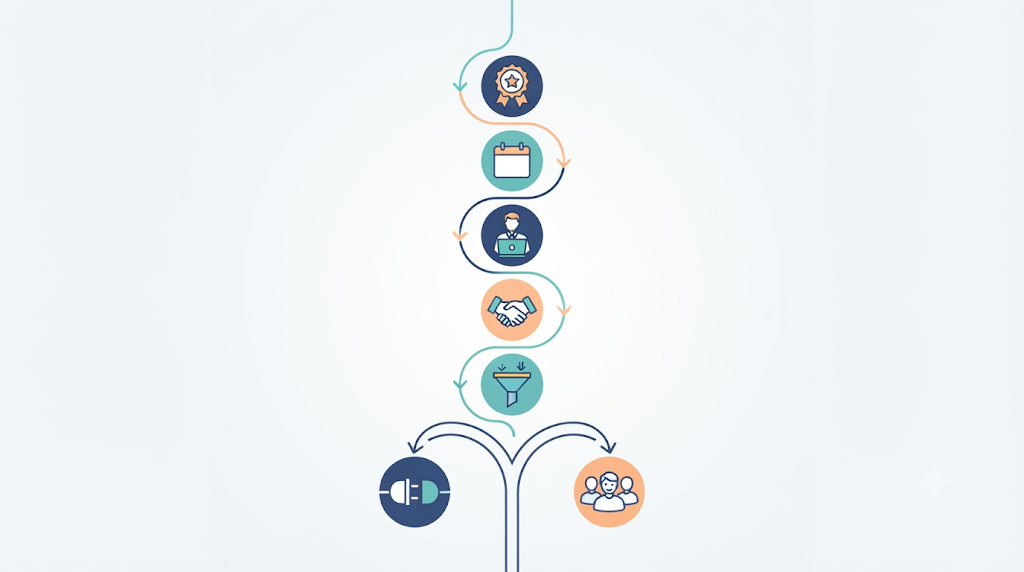
Some agencies need more than extra developers, but they aren’t ready to hand an entire product to an outside company. That middle ground is where product co-development comes in.
In this approach, the agency and its engineering partner work together on planning, architecture, and implementation, with responsibilities clearly defined for each side. It can be especially useful when you’re expanding into complex software products or AI-enabled applications and need both capacity and engineering expertise.
The commercial model can be built around team capacity, milestones, or agreed deliverables, depending on how uncertain the project is and which responsibilities each party accepts.
The key is to define accountability up front. An engagement label alone never guarantees it. Principles from the Agile Manifesto, such as customer collaboration and responding to change, are a good lens for judging whether a partner works the way you do.
How EOV Digital Approaches Engineering Partnerships
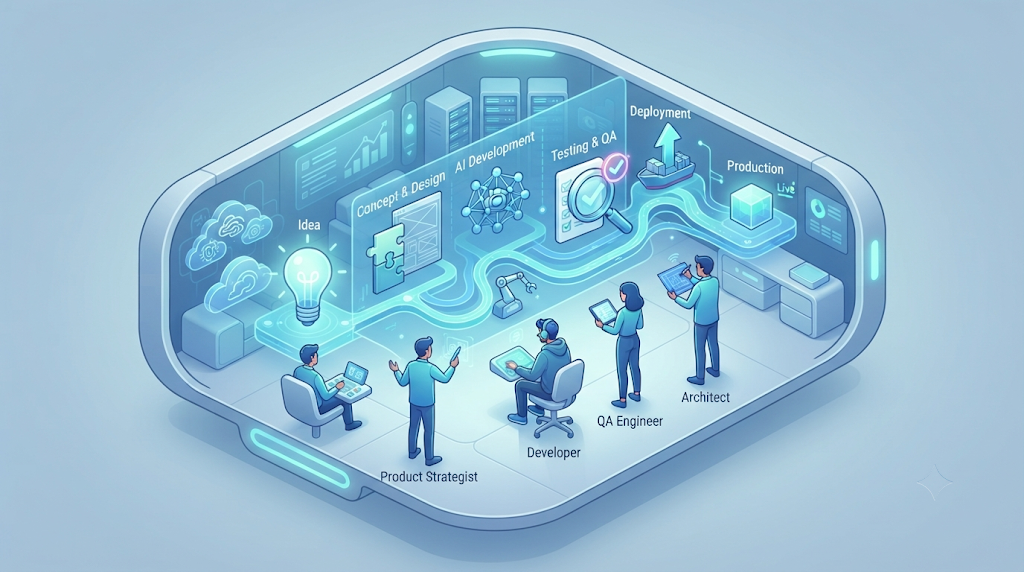
At EOV Digital, we work with businesses as a product co-development partner, using AI-native engineering pods to extend product development capacity from roadmap planning all the way to production delivery.
For digital agencies, this offers a practical option when individual staff augmentation is too narrow, but you still want to keep your client relationships, business strategy, and product direction in your own hands.
If you want to see how this looks in real projects, explore our case studies. Depending on what you’re building, these services may also be relevant:
- AI-Native Digital Product Engineering for building scalable products from concept to production
- Digital Product Consulting for roadmap and strategy support
- Quality Assurance for AI-driven testing and CI/CD confidence
- Agentic AI for AI-enabled applications and workflows
Agencies looking for a long-term relationship can also check our Partner With Us page, or learn more about EOV. The right structure always depends on your roadmap, internal leadership, and delivery requirements, so we design each engagement around the work to be delivered and the responsibilities both sides can realistically own.
Frequently Asked Questions
What is the main difference between a dedicated development team and staff augmentation?
Staff augmentation adds individual professionals to your existing team and usually leaves management and delivery responsibility with you. A dedicated development team is a coordinated group assigned to your product, and its responsibilities depend on what you agree in the contract.
Is a dedicated development team better than staff augmentation for digital agencies?
Not always. A dedicated team suits ongoing, interdependent work, while staff augmentation suits specific skill gaps when you already have strong leadership. The better choice is the one that fits your workload, roadmap, and management capacity.
Which is cheaper, staff augmentation or a dedicated team?
Neither is cheaper in every case. Look at total delivery cost, including management time, onboarding, coordination, and delays, rather than comparing individual hourly rates.
Can a dedicated team take responsibility for delivery?
It can, but only if the contract says so. A team is not automatically accountable for business outcomes, so define deliverables and ownership clearly.
When should an agency consider product co-development?
When you need both extra capacity and engineering expertise, but you still want to keep your client relationships and product direction. It works best when responsibilities for each side are clearly defined.
Final Decision: Solve Your Actual Bottleneck
Staff augmentation is often right when you need specific skills and already have the management structure to use them well. A dedicated development team fits better when you need continuity, coordinated capacity, and ongoing support for a product roadmap. Product co-development is worth a look when you also want collaborative technical planning and clearly defined responsibility for delivery.
Before you commit to anything, name the real bottleneck. Is it a missing skill, not enough capacity, weak technical leadership, or no one owning delivery? Fixing that matters far more than picking the most popular engagement model.
Not sure which route fits your agency? Talk to our team and we’ll help you map your roadmap to the right engagement model. You can also browse more engineering insights on our blog.
Leave a Reply