

Author: Pankaj Tayade

  • The Essential 2026 Guide: When Enterprises Should Adopt AI-Native Product Engineering Using Azure AI & .NET

    The Essential 2026 Guide: When Enterprises Should Adopt AI-Native Product Engineering Using Azure AI & .NET

    Artificial Intelligence is no longer a speculative innovation line item reserved for Big Tech experimental labs. Across major global business corridors spanning the United States, the United Kingdom, Germany, the Netherlands, Belgium, Luxembourg, Denmark, Norway, Singapore, and India enterprises are actively pivoting toward AI-Native product engineering. The objective is clear: modernize digital platforms, automate fragmented operational workflows, unlock hidden data intelligence, and accelerate executive decision cycles.

    For CEOs, CTOs, VPs of Engineering, and Digital Innovation leaders, the strategic conversation has fundamentally shifted. The critical question is no longer, “Should we adopt AI?”

    The real question is: “When do we transition to an AI-Native product engineering paradigm, and how do we execute it responsibly at an enterprise scale?”

    To achieve this transition without discarding decades of core infrastructure investment, Microsoft’s enterprise grade technology ecosystem specifically Azure AI, .NET, and advanced AI orchestration frameworks has emerged as the premier strategic foundation. Organizations that move early to build AI-Native systems with robust governance, sound architecture, and tight business alignment will capture asymmetric competitive advantages in digital scalability and market agility.


    What Is AI-Native Product Engineering?

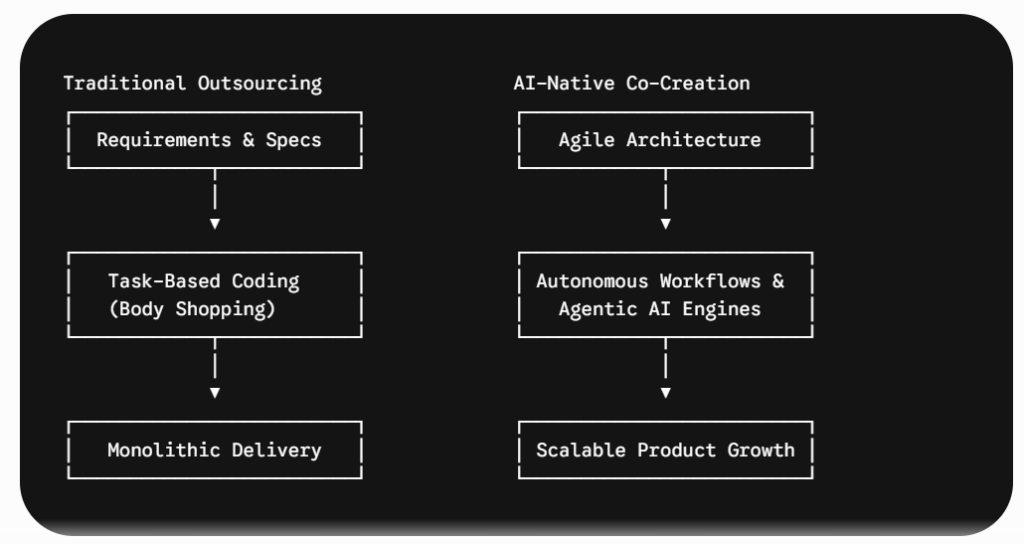
    Traditional software architectures are fundamentally rule-based systems. They rely on rigid, predefined relational workflows, hard-coded conditional logic, and static data processing paradigms. If an edge case falls outside the hard-coded parameters, the system breaks, requiring manual human intervention or expensive code refactoring.

    AI-native product engineering completely flips this script. An AI-Native application is conceived, architected, and deployed from the ground up to inherently leverage:

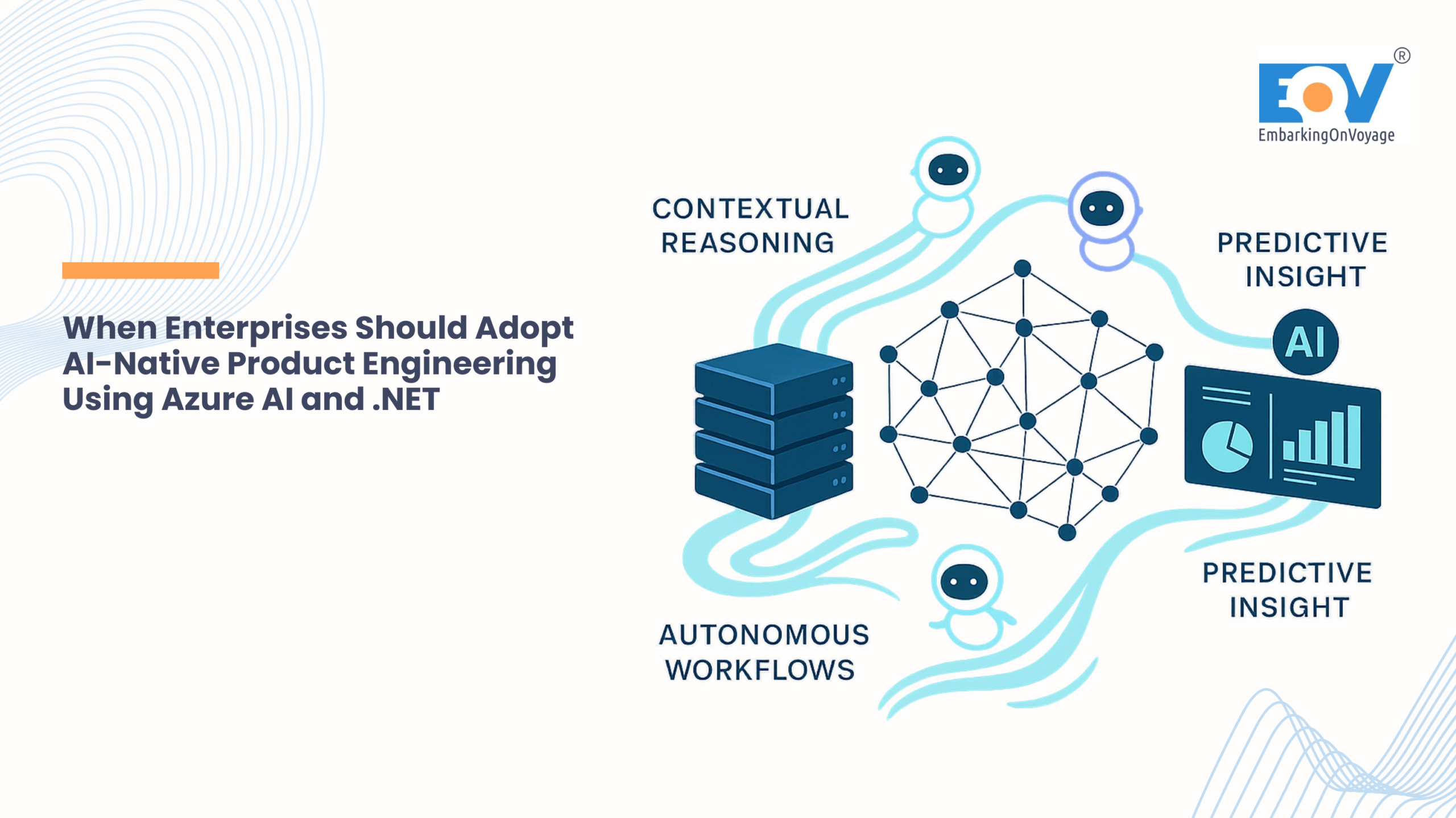
    • Contextual Reasoning: The ability to understand nuance, human intent, and unstructured operational inputs.
    • Autonomous Workflows: Self-orchestrating software sequences that dynamically adapt to real-time changes without human micro-management.
    • Predictive Insight & Decision Intelligence: Moving from descriptive dashboards (what happened) to prescriptive execution (what to do next).

    Instead of tacking a basic generative AI wrapper or chat widget onto a legacy system, AI-native engineering embeds deep cognitive intelligence directly into core workflows, microservices, databases, and customer-facing experiences. These systems do not remain static; they continuously evolve by learning from ongoing data interactions, system logs, and changing operational patterns.


    Why Azure AI and .NET Are Emerging as Enterprise Standards

    A massive roadblock to digital transformation is the sheer risk and cost of a “rip-and-replace” approach. A significant portion of the world’s enterprise infrastructure runs on deep Microsoft ecosystems built around .NET, Microsoft Azure, SQL Server, Dynamics 365, and enterprise APIs.

    Adopting AI-native engineering through Azure AI and .NET allows global organizations to inject advanced cognitive intelligence into their software assets without rebuilding their underlying technological foundations from scratch.

    The Microsoft AI stack provides a highly resilient environment for enterprise applications due to several key factors:

    1. Enterprise-Grade Security & Compliance

    Azure AI inherits the comprehensive security compliance of the Azure cloud ecosystem. This includes strict data privacy controls ensuring your proprietary enterprise data is never used to train public foundational models, satisfying stringent GDPR, HIPAA, and local data sovereignty laws across Europe and APAC.

    2. Semantic Kernel and Advanced Orchestration

    Semantic Kernel is a powerful lightweight SDK that allows developers to easily mix conventional programming languages like C# with the latest AI Large Language Models (LLMs). It acts as the orchestration engine, enabling developers to build sophisticated AI plugins, manage native memory, and seamlessly trigger autonomous workflows.

    3. Cloud-Native Infrastructure & Reliability

    By combining .NET performance with Azure Kubernetes Service (AKS), Azure OpenAI service, and Azure AI Search, enterprises can construct high-throughput, low-latency AI platforms that automatically scale based on global operational demand.

    For corporate leadership, this ecosystem provides a predictable, secure, and lower-risk pathway toward complete AI transformation.


    5 Critical Indicators: When to Transition to AI-Native Engineering

    AI-native transformation should never be pursued merely to chase technological trends; it must be driven by operational necessity. The most successful implementations occur when traditional software systems hit a wall regarding complexity and scale.

    If your enterprise is experiencing any of the following five indicators, it is time to transition to an AI-native engineering model:

    1. When Existing Workflows Hit an “Operational Complexity” Wall

    As an enterprise scales globally, its internal processes fragment across dozens of siloed legacy applications, regional vendor databases, and inconsistent customer communication channels. Traditional rule-based software buckles under the weight of this variance, requiring teams to build endless integration patches.

    • The AI-Native Solution: You should transition when your business demands intelligent workflow orchestration that can autonomously analyze multi-layered data inputs, make real-time decisions, and handle complex edge cases.
    • Enterprise Examples: Automated multi-currency financial risk analysis, intelligent end-to-end customer onboarding, real-time supply chain inventory re-routing, and predictive dynamic pricing engines.

    2. When Your Enterprise Has Mass Data But Lacks Actionable Intelligence

    Most mid-market and enterprise companies sit on absolute goldmines of structured and unstructured operational data (emails, PDFs, logs, call recordings, database records). However, they face an immense gap between data availability and real-time decision-making velocity. Traditional business intelligence tools can only tell you what went wrong last quarter.

    • The AI-Native Solution: When your leadership teams realize that standard static dashboards are stalling corporate agility, an AI-native system powered by Azure AI Search and .NET can step in. It ingests enterprise-wide data streams to surface real-time predictive insights and automated recommendations directly to your operational staff.

    3. When Customer Experience Becomes a Critical Churn Risk

    Modern digital consumers and B2B clients demand hyper-personalized, ultra-responsive interactions. Static forms, rigid menus, and basic keyword-based customer service chatbots no longer suffice. If your client experiences feel transactional and slow, your market share is vulnerable.

    • The AI-Native Solution: Especially critical within high-stakes verticals like Fintech, Healthcare, Retail, and B2B SaaS, AI-native product engineering enables deep contextual personalization, intelligent autonomous support desks, and predictive engagement loops that learn what your customer needs before they explicitly ask.

    4. When Core Software Innovation Cycles Stagnate

    If your engineering talent spends 70% of their weekly cycles managing boilerplate code maintenance, tracking down legacy integration bugs, or performing routine regression testing, your business agility is dying.

    • The AI-Native Solution: Transitioning to an AI-native engineering framework utilizing tools like GitHub Copilot and customized Azure AI pipelines completely changes developer velocity. It offloads low-level code acceleration and routine prototyping to AI agents, freeing your senior architects to focus heavily on core business logic, strict security architecture, and high-impact product innovation.

    5. When Modernizing Legacy Systems via “Rip-and-Replace” Is Too Risky

    Many established enterprises across Europe and North America possess sprawling legacy .NET framework systems that manage mission-critical business logic. Scrapping these platforms entirely is an operational nightmare it is cost-prohibitive, incredibly risky, and causes severe business disruption.

    • The AI-Native Solution: Azure AI and modern .NET (.NET 8/9+) offer an ideal modernization runway. Engineering teams can incrementally wrap legacy services in intelligent APIs, gradually introducing autonomous orchestration layers and AI-driven data insights without disturbing the core operational engine.

    The Core Philosophy: Human-in-the-Loop Engineering

    A dangerous misconception in the current market is that enterprise AI adoption means replacing human oversight with completely unchecked autonomous algorithms. In high-compliance, enterprise-grade ecosystems, this approach leads to catastrophic failures, hallucinations, and severe legal liability.

    True AI-native engineering champions a Human-in-the-Loop (HITL) architecture:

    What the Azure AI / .NET Stack AcceleratesWhere Humans Retain Absolute Control
    High-velocity data processing and structural analysisComprehensive algorithmic governance and policy
    Real-time predictive recommendationsComplex enterprise architecture design
    Autonomous cross-platform workflow orchestrationDeployment validation and edge-case auditing
    Automated low-level code generationStrategic business alignment & ethical decisioning

    The future of sustainable enterprise software is not fully autonomous, isolated machine logic. It is AI-augmented enterprise intelligence completely guided by seasoned human expertise. This framework is non-negotiable for sectors like Fintech, Insurance, and Healthcare, where auditing and data provenance are strictly mandated.


    Deployed Reality: The Ascent of Agentic AI

    The absolute cutting edge of AI-native product engineering is the shift toward Agentic AI. Unlike standard conversational chatbots that simply respond to text prompts, Agentic AI systems are comprised of goal-oriented, autonomous software agents capable of independent reasoning, maintaining contextual memory across long operational cycles, and executing multi-step cross-application tasks.

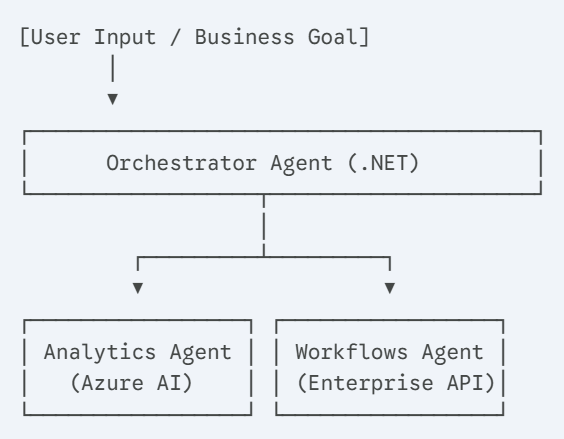
    Using Semantic Kernel and .NET, developers can construct multi-agent networks where individual AI agents are assigned specialized operational roles:

    AI-Native product engineering

    or instance, one agent can continuously monitor global logistics data via Azure AI, another can analyze financial impacts, and a third can automatically execute supply chain adjustments via enterprise APIs—all working collaboratively under human-defined parameters.


    Actionable Best Practices for Enterprise AI Transformation

    For leadership teams mapping out their AI-native product roadmaps over the next 12 to 24 months, prioritize these foundational principles:

    • Anchor Strategy to Real Business Friction: Never build an AI platform simply for the sake of saying you use AI. Start directly with an operational pain point—whether it’s an inefficient customer onboarding workflow, a bloated supply chain node, or stagnating developer output. Technology must serve the business outcome.
    • Establish Algorithmic Governance Day One: AI safety, auditability, explainability, and bias mitigation must be baked directly into your product architecture, not added as a post-deployment checklist. Utilize Azure AI Content Safety and strict enterprise telemetry logs to ensure absolute transparency.
    • Commit to Up-skilling Your Technical Teams: Moving to an AI-native development paradigm means your engineers must transition from traditional coders into orchestrators of AI systems. Invest heavily in training your team on Semantic Kernel, vector databases, and prompt architecture.

    The enterprises that successfully balance advanced AI acceleration, rigorous human oversight, and modern product engineering will define the next generation of global digital business.

    Ready to Future-Proof Your Enterprise Application Stack? At EmbarkingOnVoyage (EOV), we specialize in helping global enterprises architect, deploy, and scale robust AI-native products using the power of Azure AI and modern .NET ecosystems. Let’s turn your operational complexity into a distinct market advantage.

    Connect with our Product Engineering Experts at EOV Today.

    Latest Blog – https://embarkingonvoyage.com/hr/cultivating-global-innovators-how-eov-is-building-the-future-of-ai-native-tech-in-pune/

    External Read – https://www.gartner.com/en/newsroom/press-releases/2025-08-26-gartner-predicts-40-percent-of-enterprise-apps-will-feature-task-specific-ai-agents-by-2026-up-from-less-than-5-percent-in-2025

  • Understanding Clean Architecture in Large MEAN and MERN Codebases

    Understanding Clean Architecture in Large MEAN and MERN Codebases

    Clean Architecture in Large MEAN and MERN Codebases is a topic I’ve written this blog around, based on a reality many MEAN and MERN teams face. Most projects start small a few screens, a simple API, and one or two developers. But over time, features grow, teams expand, deadlines tighten, and the codebase slowly becomes more complex. Eventually, it reaches a point where no one fully understands the entire system, making changes risky and time-consuming.

    Basically, at that point, new features take longer, bugs reappear in different places, and small changes break unrelated parts of the system. The problem is usually not the framework. It is the lack of clean architecture and discipline. 

    The following article focuses on how to keep large MEAN and MERN applications maintainable, and what clean architecture really means in daily development, not just in theory. 

    What is Clean Architecture Means?

    Clean architecture isn’t about fancy diagrams or complex theory. It’s built on a few simple ideas that help systems stay manageable as they grow.

    At its core, clean architecture means:

    • Code should be easy to read and understand
    • Business rules should not depend on frameworks
    • Changes in one area shouldn’t break everything else
    • Unit tests should be easy to write and maintain
    • New developers should be able to contribute without weeks of confusion

    When a system fails in these areas, the architecture has already started to drift regardless of which framework is being used.

    Common Problems in Clean Architecture in Large MEAN and MERN Codebases

    In real-world projects, the same warning signs tend to show up again and again as applications grow. Below are some commonly observed problems.

    • Front-end components become bloated and hard to manage.
    • Business logic slowly creeps into UI components.
    • APIs expand without clear documentation or consistent structure.
    • Folder structures keep changing, making navigation confusing.
    • Developers hesitate to remove unused code, fearing breakages.
    • The same logic gets duplicated across multiple files.

    When these issues start appearing, even small features take more time than they should and the overall development experience begins to suffer.

    Separation of Concerns on the Backend

    In many Node.js projects, the backend starts off clean and well-organized. But as features are added quickly, controllers slowly turn into large files that try to handle everything. Over time, this makes the code easy to read, test, and maintain.

    A clean backend architecture clearly separates responsibilities, such as:

    • Controllers for handling incoming requests
    • Services for business logic and decision-making
    • Repositories or data access layers for database interactions
    • Models for defining data structures

    Controllers shouldn’t contain complex business rules. Their role is simple receive a request, call the appropriate service, and return a response. Similarly, database queries should not be scattered across the codebase. Keeping them within a dedicated data layer improves readability and makes future changes, like database migrations, must be easier.

    Avoid Mixing Framework Code with Business Rules

    One of the biggest reasons projects become tightly coupled is when business logic starts depending directly on framework-specific code. It usually happens gradually and often without anyone noticing.

    You might see things like Angular services closely tied to UI components, React components handling API calls and business decisions, or business calculations living inside Express middleware. At first, this feels convenient. Over time, it becomes a problem.

    Ideally, your core business logic should remain independent of any framework. When you keep it framework-agnostic, you gain several advantages. It becomes easier to test, simpler to reuse, and much safer to move between libraries or tools if your stack changes. Just as importantly, it keeps your UI layers clean and focused.

    The frontend’s primary responsibility should be presenting data and handling user interaction—not deciding how core business rules work.

    Avoid Utilizing Business Rules with Framework Code

    When business logic begins to rely directly on framework-specific code, it is one of the main causes of close integration in projects. Usually, it occurs frequently and gradually without anyone noticing. For example:

    • Business calculations tied to Express middleware
    • Angular services directly tied to UI components
    • React components directly containing API logic

    Your fundamental business logic should ideally be unaltered by any framework. There are a number of benefits to keeping it framework-agnostic. It becomes easier to test, simpler to reuse, and much safer to move between libraries or tools if your stack changes. Additionally, it maintains the focus and cleanliness of your UI layers.

    Presenting data and managing user interaction should be the frontend’s main duties, not determining how fundamental business rules operate.

    Organizing Large Angular and React Projects by Feature

    Because everything is organized into technical folders like components, services, or utils, front-end codebases frequently become disorganized as they expand. This doesn’t scale well, even though it works for small projects.

    Arranging the codebase according to features is a more sustainable method. For instance, you may have distinct folders for orders, billing, reports, and users. Then, each feature has its own models, services, and components.

    Developers can find everything related to a particular area of the system much more easily due to this structure. Additionally, it allows parallel development, which lets several teams operate separately without interfering with one another.

    API Design Discipline in MEAN and MERN

    APIs are the foundation of the entire application in MEAN and MERN systems. The frontend structure nearly always suffers when APIs are poorly designed.

    A few easy habits can make a big difference. Make use of standardized error handling procedures, predictable response formats, and consistent naming conventions. Don’t send more data than the client truly requires; instead, version your APIs.

    Frontend code inherently becomes simpler, easier to read, and easier to maintain when APIs are clear and consistent.

    TypeScript as a Foundation for Clarity

    TypeScript is now widely used in React projects as well as Angular. It’s crucial in large codebases, not just a nice-to-have.

    TypeScript documents intent through types, helps identify bugs early, and maintains clear contracts between system layers. Additionally, it makes refactoring much safer as the codebase expands.

    Although untyped code may seem quicker at first, it typically becomes challenging to handle much sooner.

    Testing Small Units Instead of Only Full Flows

    Clean architecture makes testing easier. Dirty architecture makes it nearly impossible.

    You do not need 100 percent coverage to build reliable systems. What you need is the ability to test important logic chunks without setting up the entire app. That is only possible when business logic is separated from:

    • Framework hooks
    • Routing
    • UI rendering

    Tests are not an afterthought. They are a signal of whether your architecture is actually decoupled.

    Handling Technical Debt Intentionally

    No real-world project is free from technical debt. The problem isn’t having debt it’s pretending it doesn’t exist.

    Healthy teams acknowledge technical debt openly. They write it down, prioritise what actually matters, and refactor gradually instead of attempting risky rewrites.

    Most large MEAN and MERN codebases don’t fail because of bad technology choices. They fail because teams never make time to pay back accumulated debt.

    Documentation Is Part of the Architecture

    Clean architecture doesn’t live only in code. It also shows up in how knowledge is shared across the team.

    Basic documentation should cover things like project structure, environment setup, API specifications, common commands, and coding guidelines. Without this, onboarding becomes slow, and architectural quality slowly erodes as developers guess instead of following shared standards.

    Final Thoughts

    Understanding Clean Architecture in Large MEAN and MERN applications do not become messy overnight. They drift due to rushed deadlines, lack of ownership, quick fixes, and missing architectural discipline. Clean architecture is not about adopting a trendy pattern. It is about writing code in a way that your future self and your future team will thank you for.

    • Keep layers clear
    • Separate business logic from frameworks
    • Organize by features
    • Design APIs carefully
    • Use TypeScript wisely
    • Test important parts
    • Treat technical debt seriously

    If you build with these principles in mind, your MEAN or MERN codebase can grow large without becoming fragile or exhausting to work with.

    Latest Blog Highlights: https://embarkingonvoyage.com/blog/dark-mode-design-best-practices-for-modern-ui-ux/

  • 7 Proven Strategies to Strengthen Software Development Team Culture Through Continuous Learning

    In today’s fast-paced tech landscape, having a highly skilled engineering team is no longer enough.  

    What truly sets successful organizations apart is a software development team culture rooted in continuous learning, adaptability, and innovation. 

    This blog outlines practical strategies for cultivating a learning-driven culture in your software engineering teams—one that not only keeps your developers up to date but also drives business value through innovation and improved team collaboration. 

    1. Leadership Drives the Learning Culture 

    Creating a strong engineering team learning culture starts with leadership. When leaders visibly support and engage in continuous learning, they set the tone for the rest of the team. 

    • Lead by Example: When senior engineers and managers take part in courses, tech events, or new certifications, it sends a clear message—growth never stops. 
    • Invest in Learning: Allocate budgets for online learning platforms, certifications, and conference attendance. Supporting structured learning encourages long-term team retention and higher performance. 

    2. Define a Structured Learning Framework 

    A great software development team culture includes a framework that allows every engineer to see their growth path. 

    • Implement a Skill Matrix: This helps assess current competencies and identify gaps across your tech team—making training efforts more targeted and data-driven. 

    3. Foster Knowledge Sharing and Peer Learning 

    A healthy collaborative tech team thrives on shared knowledge. Make it easy for developers to teach, learn, and grow together. 

    • Host Tech Talks: Encourage team members to present recent learnings, tools, or frameworks. 
    • Run Internal Hackathons and Workshops: These hands-on activities build camaraderie and spark creative problem-solving. 
    • Maintain an Internal Wiki: Document best practices, technical retrospectives, and solutions to recurring challenges. 

    4. Leverage Digital Learning Platforms 

    Support continuous learning for developers through flexible, on-demand education. 

    • Provide Access to eLearning Subscriptions: Platforms like Pluralsight, LinkedIn Learning, and Coursera allow tailored learning for beginner to advanced engineers. 
    • Allow Time for Self-Paced Learning: Whether during “learning hours” or as part of weekly goals, make time for individual skill-building. 

    5. Promote a Developer Growth Mindset 

    Adopt a culture where learning is encouraged, and failure is treated as a stepping stone. 

    • Celebrate Learning Milestones: Recognize certifications, completed courses, and successful project experiments. 
    • Encourage Risk-Taking: A safe space to explore ideas builds confidence and innovation among your software development team

    6. Encourage Mentorship and Peer Collaboration 

    Mentorship and pair programming are foundational pillars for growing a resilient engineering team learning culture

    • Launch a Mentorship Program: Senior developers can offer guidance and transfer practical knowledge to junior engineers. 
    • Encourage Pair Programming and Code Reviews: These practices promote real-time feedback, learning by doing, and better code quality. 

    7. Measure Progress and Provide Feedback Loops 

    Sustaining a software development team culture requires regular feedback and measurable outcomes. 

    • Conduct Feedback Sessions: Check in with team members to understand roadblocks, learning goals, and performance. 
    • Integrate Learning into Performance Reviews: Reward learning efforts and tie them to career progression to keep your team motivated. 

    ✅ Conclusion 

    A thriving software development team culture isn’t built overnight—it’s nurtured through intention, leadership, and consistent effort.  

    By prioritizing continuous learning for developers, encouraging collaboration, and supporting individual growth, your engineering team will be better equipped to embrace change, adapt to new technologies, and deliver greater value. 

    Incorporating these strategies ensures that your team doesn’t just keep up with the tech curve—they stay ahead of it.  

    Whether you’re scaling a startup or modernizing enterprise software systems, a strong learning culture will fuel innovation, efficiency, and long-term success. 

    Additional Resources: 

  • From Developer to Tech Leader: My Transition Story

    Transitioning from a developer to tech lead is more than just a title change—it’s a significant evolution in mindset, responsibility, and how you impact your software team and organization.

    Whether you’re an individual contributor aiming to grow or a company nurturing internal talent, understanding this shift is crucial for scaling software development successfully. 

    In this blog, I’ll share my personal engineering leadership journey—what changed, what challenged me, and what made the transition from developer to tech lead both fulfilling and eye-opening. 

    1. Success Becomes a Team Sport 

    As a developer, your success is measured by what you deliver—the clean code, fixed bugs, or the modules shipped. But when you move into software team leadership, the lens shifts. It’s no longer about your individual wins; it’s about how your entire team succeeds

    You start asking: 
    “How can I help my team do their best work?” 
    This transition requires empathy, trust, and the willingness to step out of the spotlight so others can shine. 

    2. You Still Code—But You Enable More Than You Build 

    One of the biggest misconceptions about becoming a tech lead is that you stop coding. The truth? You still code, but your role becomes more strategic. 

    As a tech lead, I found myself: 

    • Reviewing critical code 
    • Contributing to architectural decisions 
    • Setting best practices and coding standards 
    • Assisting junior developers 
    • Jumping in during tight deadlines 

    The key difference is: you’re enabling others more than doing everything yourself. 

    3. People Management Becomes Part of the Job 

    Code is predictable—people are not. One of the hardest parts of the transition to tech lead was learning how to work effectively with different personalities, handle conflicts, and keep the team motivated through ups and downs. 

    Strong soft skills—like active listening, clear communication, and conflict resolution—are just as important as your technical stack. As a tech leader, you are part mentor, part coach, and part problem-solver. 

    4. You Represent the Team to Stakeholders and Clients 

    Once you step into a tech leadership role, you become the point of contact between your team and upper management or clients. You’re now responsible for: 

    • Managing delivery timelines 
    • Communicating risks and blockers 
    • Handling scope changes with confidence 
    • Representing your team’s effort without blame or panic 

    Being the face of delivery means balancing transparency with accountability—two skills critical to becoming a tech lead who earns trust. 

    5. Mentorship Becomes Central to Your Role 

    The first time I mentored a junior developer, I didn’t realize how much I would grow in the process. Teaching forces you to simplify your knowledge, communicate clearly, and develop patience. Today, mentoring has become one of the most meaningful parts of my role. 

    Investing time in others’ growth not only strengthens your team—it strengthens you as a tech leader

    6. You Think Beyond This Week’s Deadline 

    Early in my career, I used to focus on daily tickets and weekly sprints. But now, as a tech lead, I think in terms of long-term impact: 

    • Will this architecture scale a year from now? 
    • Are we using reusable and maintainable components? 
    • Do we have the right team composition for future work? 
    • What are the risks if a critical team member exits? 

    Thinking like a software architect and planning for sustainability is a key trait in successful engineering leadership

    Final Thoughts: Leadership Starts Before the Title 

    The journey from developer to tech lead is filled with challenges, growth, and a deep sense of responsibility.  

    It’s not just about writing code—it’s about building teams, enabling growth, and delivering scalable solutions that align with business goals. 

    To every developer reading this: 
    Leadership doesn’t start when someone assigns you a title. It begins when you take ownership—of your work, your team, and your vision. 

    Additional Resources: 

  • Why Project Documentation in Software Development Is Essential for Small Teams?

    In the world of software development, documentation often takes a back seat to coding, debugging, and delivering features. But ignoring it can create major challenges—especially for small, fast-moving teams.

    The truth is, project documentation in software development isn’t just good practice—it’s essential. 

    At EmbarkingOnVoyage Digital Solutions, we’ve learned this firsthand while managing projects for enterprise clients and startups. Let’s explore why documentation is not optional, and how it plays a vital role in maintaining clarity, continuity, and trust. 

    1. Team Members Will Take Leaves—or Move On 

    Every software project relies on its people—but people are not always available. One of our senior developers went on leave during a client escalation, and no one else could step in effectively. Why? There was no documentation—no setup guides, no API references, no written logic. 

    Tribal knowledge is risky. In smaller development teams, the absence of documentation can lead to lost hours and disrupted timelines. Knowledge transfer in software development only works if information is accessible to everyone. 

    2. New Developers Shouldn’t Depend on the “Main Guy” 

    When new developers join a project, they shouldn’t have to rely solely on senior team members for guidance. With proper software project onboarding materials—like flow diagrams, module explanations, and API references—they can quickly get up to speed and start contributing. 

    This is one of the best practices in development team documentation. It reduces downtime, avoids bottlenecks, and boosts productivity from day one. 

    3. Documentation Saves Time—Again and Again 

    At first glance, writing documentation may feel like a delay. But over time, it prevents repetitive queries: 

    • What’s the request format for this API? 
    • Where’s the database connection string? 
    • Why did we choose this library? 

    Instead of answering these questions repeatedly, you document the answer once. This is the long-term benefit of software documentation—you create a centralized source of truth. 

    4. Documentation Builds Client Trust 

    Enterprise clients and funded startups expect more than code—they look for process maturity. Organized, up-to-date documentation signals reliability and foresight. 

    We’ve had clients appreciate our handover clarity. One said, Your documentation gave us the confidence to assign future modules to your team. That’s the kind of trust that grows partnerships. 

    Well-structured client handover documentation also streamlines future collaboration and reduces the risk of misunderstandings. 

    5. Documentation Doesn’t Have to Be Complicated 

    One common myth is that documentation needs to be full of diagrams or fancy UI tools. That’s not true. 

    Clean, simple documentation—whether it’s in Markdown files, README notes, or Google Docs—is more than enough.

    Here’s the basic documentation structure we follow on all projects: 

    • Project setup instructions 
    • Database schema and scripts 
    • API list (with request and response formats) 
    • Overview of business logic 
    • Known issues and limitations 
    • Deployment steps 

    This covers about 80% of what developers, testers, or support teams typically need to get going. 

    🔍 Why Documentation is Critical for Small Development Teams?

    In smaller software teams, there’s limited bandwidth and high dependency on individuals. Every hour and every process counts. Project documentation in software development ensures continuity, saves time, and prevents knowledge loss. 

    It’s not just about writing code—it’s about building systems that others can understand, maintain, and expand. That’s why documentation is not an afterthought—it’s a strategic asset. 

    Before closing a feature or wrapping up a module, ask yourself: 

    “If I stepped away today, could someone else continue this without me?” 

    If the answer is no, your documentation isn’t complete yet. 

    Conclusion

    In software, great code builds the product—but great documentation keeps it alive. For small development teams working with enterprises and scaling startups, clear documentation is not a luxury.  

    It’s the backbone of collaboration, client trust, and long-term project success. 

    If you’re looking for a software development partner who values clarity, communication, and continuity as much as code—EmbarkingOnVoyage Digital Solutions is ready to help. 

    Additional Resources: 

  • Engineering Teams in Startups: 7 Real Lessons on Scaling Successfully

    Building engineering teams in startups is not just about expanding headcount — it’s about developing the right culture, aligning processes with growth, and hiring people who thrive in ambiguity. 

    At EmbarkingOnVoyage Digital Solutions (EOV), we started with a handful of engineers juggling code, meetings, and customer support. Today, we’re a 30–35 member team with greater structure and sharper engineering maturity. Through real-world experiences, we’ve learned what works (and what doesn’t) when scaling engineering teams in fast-growing startups. 

    If you’re leading or planning to grow your tech team in a startup, these are lessons you can’t afford to miss. 

    1. Prioritize Attitude Over a Perfect Tech Stack Fit 

    In startups, versatility matters. We’ve learned that hiring people with the right mindset — curiosity, adaptability, and accountability — outperforms hiring solely based on a checklist of technical skills. 

    Some of our best engineers didn’t have prior experience with our stack but showed immense willingness to learn. On the other hand, those with strong resumes sometimes struggled when startup reality kicked in. In startup environments, hiring for attitude is non-negotiable

    2. Communicate Startup Expectations from Day One 

    Unlike established enterprises, engineering teams in startups often work across multiple roles. Developers may code, test, deploy, and even interact directly with clients. 

    To avoid misalignment, we make it clear during onboarding: startup life is fast, dynamic, and cross-functional. Setting this expectation early has helped us build a team that embraces ownership and thrives in uncertainty. 

    3. Make Documentation a Non-Negotiable Practice 

    Documentation may not be glamorous, but it’s vital. Without it, your startup becomes vulnerable to knowledge silos. When team members take leave or exit, undocumented modules can create chaos. 

    We’ve learned to build a culture where even senior engineers document workflows and decisions. It supports long-term scalability and reduces dependency on individuals — especially crucial for software development in startups. 

    4. Start Simple — Tools and Processes Will Evolve 

    When we started, we managed projects on spreadsheets. As we scaled, we transitioned to Jira and adopted CI/CD for deployments. But we didn’t wait for the “perfect” setup. 

    The best approach? Start with what you have, improve iteratively, and adapt processes as your engineering team grows. Flexibility is key in early-stage startups. 

    5. Cultivate Ownership, Not Just Task Completion 

    We expect more than just code from our engineers. We want them to own the outcome — understand the “why” behind the feature, foresee potential issues, and test proactively. 

    This culture of ownership in engineering teams has significantly improved our product quality and client satisfaction. It’s the mindset shift from executor to stakeholder that every startup needs. 

    6. Celebrate Small Wins to Build Momentum 

    Startup life is intense — it’s easy to move from one deliverable to the next without acknowledgment. But taking a moment to recognize small milestones can go a long way. 

    Whether it’s solving a complex bug, delivering ahead of schedule, or writing clean documentation — we pause to celebrate. These micro-moments fuel team motivation and strengthen startup engineering culture

    7. Give Your Team Space to Learn and Lead 

    We’ve seen interns grow into team leads within a year. Not because we handed them titles — but because we gave them room to experiment, fail, and grow

    Scaling isn’t about adding more control — it’s about creating trust-based environments where engineers can stretch their abilities. That’s what empowers engineering teams in startups to become self-driven and high-performing. 

    Final Thoughts: Scaling is a Cultural Investment 

    Engineering teams in startups don’t scale through hiring alone — they grow through thoughtful leadership, adaptive processes, and a culture of learning and trust. 

    At EOV, we’re still learning and evolving. But if there’s one thing we know, it’s this: scaling is a series of small, intentional steps. One hire. One tool. One improved habit at a time. 

    Additional Resources: