



Software has never been easier to build. With advanced cloud platforms, AI-assisted development, open-source frameworks, and mature DevOps ecosystems, engineering teams can develop sophisticated products faster than ever before.
Yet, despite this rapid acceleration, enterprise customers continue to ask the exact same question after purchasing software:
“How do we actually make this work in our complex business environment?”
For Fortune 100 enterprises, Independent Software Vendors (ISVs), and digital agencies, the answer to this question represents the difference between product success and expensive implementation failure.
The challenge is no longer just developing software. The challenge is deploying software into highly complex enterprise environments while delivering measurable business outcomes.
Welcome to the world of Forward Deployment Engineering. It is the vital space where software engineering meets enterprise architecture, business consulting, product strategy, and increasingly, Artificial Intelligence.
Forward Deployment Engineering Is Not Just Another Delivery Function
One of the biggest misconceptions about Forward Deployment Engineers is that they are simply implementation consultants or traditional professional services staff under a different name. They are not.
A Forward Deployment Engineer is, first and foremost, a top-tier engineer. They are capable of designing architectures, writing production-grade code, building custom integrations, solving distributed systems challenges, and deploying complex solutions.
What differentiates an FDE is where these skills are applied.
Instead of working exclusively within internal product teams, FDEs operate on the front lines at the exact intersection of engineering and enterprise operations. They work directly with customers to understand constraints and engineer solutions that create immediate business value, all without compromising the core product’s integrity. The objective is not to customize software indefinitely; it’s to ensure enterprise software becomes operationally successful.
Enterprise Software Lives in Complex Ecosystems
Very few enterprise applications operate independently. A modern enterprise deployment is a tangled web of connections. It may require seamless integration with:
- SAP or Oracle ERP systems
- Salesforce or Microsoft Dynamics CRM
- Microsoft Entra ID or Okta for identity
- Massive data warehouses
- Legacy mainframe applications
- Cloud-native microservices and API gateways
- Event streaming platforms
- AI models and industry-specific platforms
Each organization has accumulated years—sometimes decades—of technology investments. According to Gartner’s research on enterprise architecture, managing this accumulated complexity is one of the top challenges for CIOs today.
Every integration point introduces complexity. Every security policy introduces constraints. Every regulatory requirement introduces friction. Forward Deployment Engineering thrives in this complexity, designing solutions that fit naturally into the customer’s existing technological landscape.
Every Customer Is Architecturally Unique
A common mistake product organizations make is assuming that a successful deployment for one customer can be copy-pasted to another. In reality, no two enterprise environments are identical.
One organization may operate entirely on Microsoft Azure, while another relies heavily on AWS. Some maintain hybrid cloud infrastructure, and others still depend on highly secure on-premises data centers. Identity management, networking, governance, and security architectures vary wildly.
As a leading Forward Deployment Engineering company in Pune, India, we at EmbarkingOnVoyage understand that enterprise software must adapt to customer ecosystems without losing product consistency. This delicate balance requires strict engineering discipline rather than excessive, unmaintainable customization.
The Modern FDE Thinks Like an Architect and Builds Like an Engineer
Enterprise technology leaders increasingly expect engineers who understand entire systems, rather than just isolated components. FDEs work across multiple disciplines simultaneously. On any given project, they may:
- Design scalable cloud architecture.
- Build robust API integrations.
- Configure Kubernetes clusters.
- Develop CI/CD automation pipelines.
- Secure authentication using OAuth or OpenID Connect.
- Integrate cutting-edge AI services.
- Troubleshoot live production environments.
- Advise executive stakeholders on tech strategy.
This breadth of knowledge distinguishes the role from traditional software engineering. Technical depth remains essential, but systems thinking is the true differentiator.
How AI Has Fundamentally Changed Enterprise Deployments
Artificial Intelligence has introduced an entirely new layer of complexity into enterprise software. Organizations no longer just ask whether AI can generate responses; they ask deployment-centric questions:
- How will AI access our enterprise knowledge securely?
- Can confidential data remain protected from model training?
- How do we monitor and prevent AI hallucinations?
- How will data governance be enforced?
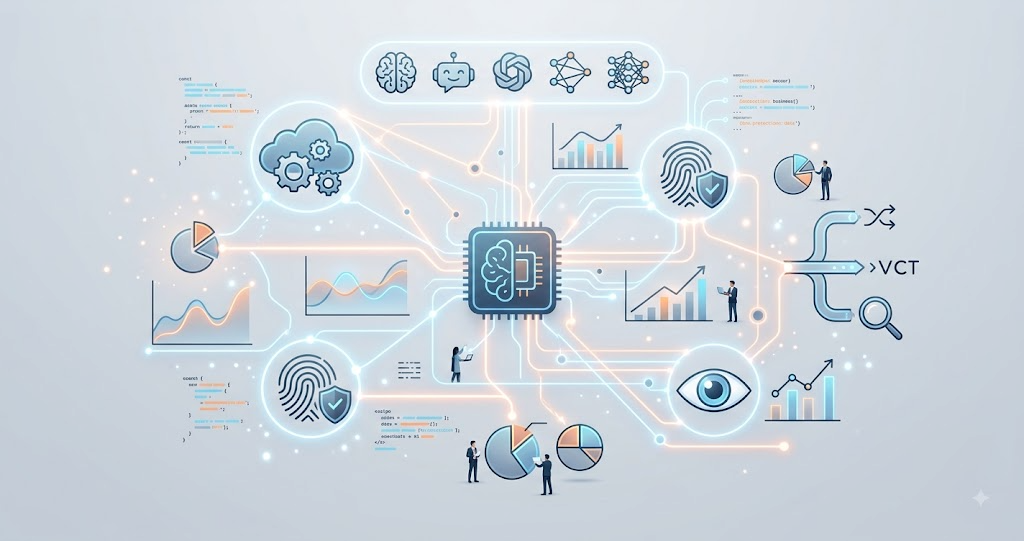
These are deployment questions, not research questions. To solve them, FDEs are increasingly building Retrieval-Augmented Generation (RAG) architectures, Enterprise AI copilots, vector search implementations, and AI observability platforms. For AI-first companies, deployment engineering has become just as critical as the model development itself.
Engineering Without Business Context Creates Technical Debt
Technology projects often fail because engineering decisions are made in a vacuum, without a sufficient understanding of real-world business operations.
Forward Deployment Engineers spend significant time understanding business objectives, operational workflows, regulatory obligations, and user behavior. Instead of simply asking, “Can we build this?”, FDEs ask, “Will this actually improve the customer’s business?” That single distinction fundamentally changes implementation outcomes.
Why Fortune 100 Organizations & Digital Agencies Value FDEs
Large enterprises rarely purchase software just for the features. They invest in strategic outcomes, evaluating technology based on time-to-value, security, compliance, operational resilience, and long-term maintainability.
Similarly, digital agencies are evolving. Clients now expect strategic technology partners rather than simple delivery vendors. Embracing the FDE model allows agencies to deliver higher-value consulting, build reusable integration capabilities, and expand into lucrative AI transformation programs.
By partnering with an experienced FDE company in Pune, India, global enterprises and digital agencies can transition from standard implementation partners to trusted technology advisors.
Looking Ahead: The Future of Software Delivery
As enterprises accelerate AI adoption and cloud migrations, software delivery will only become more sophisticated. Forward Deployment Engineers will play a central role in deploying multi-agent AI systems, autonomous business workflows, digital twins, and edge AI.
The organizations that succeed in the coming decade will not necessarily be those with the most advanced core products. They will be the companies capable of operationalizing that innovation consistently across thousands of highly complex customer environments.
Forward Deployment Engineering is quietly reshaping how enterprise software is delivered. It represents a strategic capability that connects cutting-edge innovation with measurable, lasting business value.
Ready to bridge the gap between your software product and enterprise success? Explore how EmbarkingOnVoyage’s Forward Deployment Engineering teams can accelerate your enterprise integrations and time-to-value. [Contact us today to learn more.]
Leave a Reply