


For independent software vendors (ISVs), product development is a constant balancing act. Customers expect new features. Existing functionality has to stay reliable. Technical debt competes with innovation, and security and architecture can’t be compromised along the way.
AI-native engineering pods offer a practical answer. They combine focused team ownership with AI-enabled workflows, so product priorities become dependable releases instead of an ever-growing backlog. In this guide you’ll learn what a pod is, four ways it supports ISVs, and a five-step framework for starting well.
Table of Contents
The Product Roadmap Problem ISVs Face
Most established software products have more potential improvements than their teams can deliver at once. A typical backlog mixes:
- Customer-requested features
- Integrations
- Usability improvements
- Platform upgrades
- Security enhancements
- Technical modernisation
When internal teams are fully committed, new priorities compete with existing obligations. Hiring more engineers can help, but recruitment, onboarding and coordination all take time.
Simply adding AI coding assistants isn’t the full answer either. They may speed up individual tasks without removing the wider constraints on delivery, such as unclear ownership, missing product context and inconsistent review practices.
The real challenge isn’t writing more code. It is turning product priorities into dependable releases without letting engineering complexity overwhelm the organisation. If you’re exploring how to structure that capacity, our overview of AI-native engineering services explains how we approach it.
What Is an AI-Native Engineering Pod?
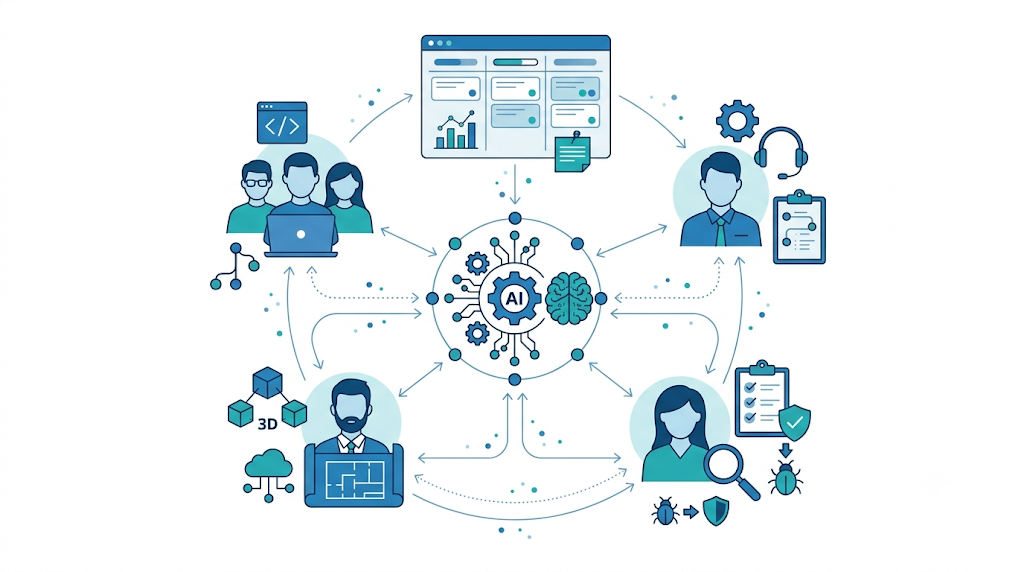
An engineering pod is a focused, collaborative team organised around a defined product scope or set of delivery objectives. Depending on the engagement, it may include software engineers, technical leadership, testing capability and architecture expertise.
AI-native engineering pods add AI-enabled workflows to daily work. These can support:
- Codebase analysis
- Implementation
- Test creation
- Documentation
- Debugging
The pod’s value shouldn’t be measured by how many AI tools it uses. Its purpose is to help turn agreed product priorities into maintainable, tested and production-ready software. The tools serve that outcome, not the other way around.
Four Ways AI-Native Engineering Pods Support ISVs
1. Move Priority Features Through the Delivery Pipeline
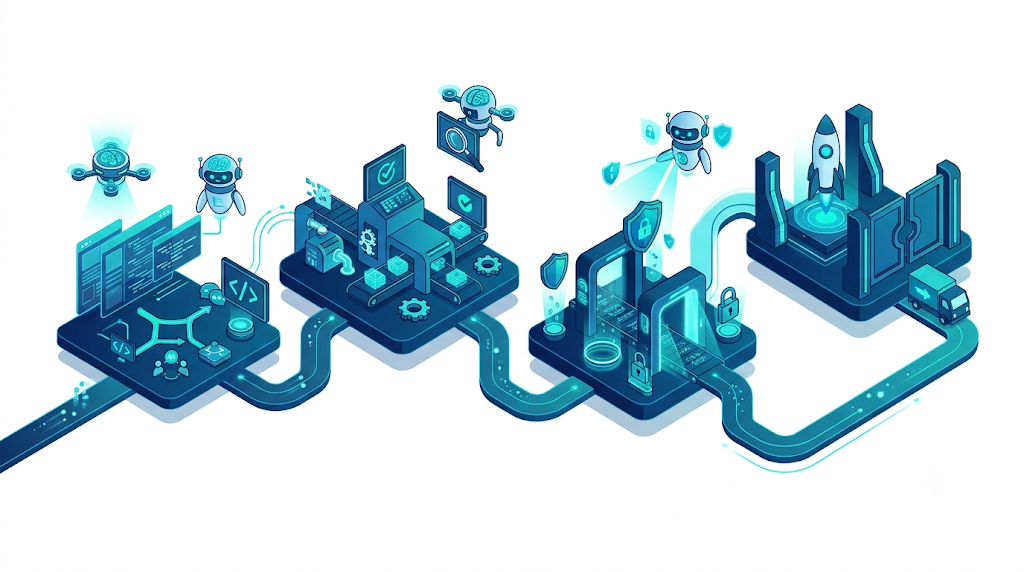
A focused pod can work on an agreed set of roadmap items while your internal team continues managing other product priorities. AI-enabled workflows can assist with implementation and validation. Clear acceptance criteria and engineering ownership keep the work aligned with product requirements.
Define what “complete” means at the start, including quality and release expectations. A pod without a shared definition of done is just extra headcount.
2. Reduce the Burden of Legacy Code Understanding
Mature products often carry complex codebases, undocumented dependencies and architectural decisions accumulated over years. AI tools can assist with code exploration, documentation and dependency analysis. Engineers still have to verify the findings and decide how to change things safely.
This lets teams investigate modernisation without treating the existing product as something that must be rewritten from scratch. Incremental approaches such as the strangler fig pattern are a well-established way to modernise a system gradually.
3. Improve Testing and Release Readiness
New features create obligations beyond implementation. They must work with existing functionality, meet security expectations and behave correctly under real conditions.
A pod can build testing and code review into its workflow instead of leaving them as final-stage activities. The specific controls depend on your product’s risk profile and deployment needs. Many teams anchor their security expectations to references like the OWASP Top 10 and the NIST Secure Software Development Framework.
4. Extend Capacity Without Losing Product Context
External capacity is most useful when it fits your objectives, technical standards and release process. A productive pod should:
- Understand your roadmap
- Follow agreed engineering practices
- Communicate risks early
- Work directly with your product and architecture stakeholders
This is the difference between adding developers and building a genuine co-development partnership. You can read more about that model on our product co-development page.
How to Introduce an Engineering Pod Successfully
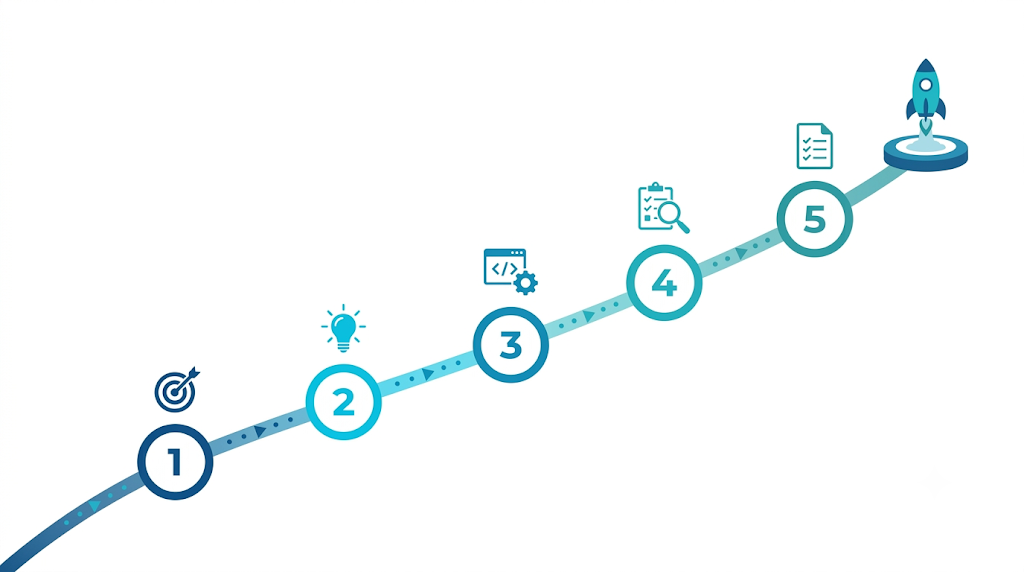
Start with a bounded, meaningful scope instead of handing over a large, poorly defined backlog. Here is a practical five-step framework.
Step 1: Select a business-relevant objective. Choose a feature set, integration, modernisation initiative or other clearly defined product outcome.
Step 2: Establish the baseline. Document current delivery lead time, known quality issues, dependencies and constraints. Industry benchmarks such as the DORA software delivery metrics offer a useful starting vocabulary.
Step 3: Agree on ownership. Define who is responsible for requirements, architecture, implementation, testing, approvals and production release.
Step 4: Integrate AI-native practices. Identify appropriate AI-enabled workflows, with agreed rules for code access, review, testing and data protection.
Step 5: Evaluate delivery evidence. Review completed scope, quality, predictability, unresolved risks and the effort required from your internal team.
The first engagement should produce evidence that the model works for your product and organisation. Scale only when the results justify it.
Commercial Accountability: Outcome-Oriented Models
Traditional capacity-based arrangements make it hard to connect engineering spend to completed product outcomes. An outcome-oriented model ties some or all commercial commitments to defined deliverables, milestones or acceptance criteria.
This needs careful design. Both parties must agree on:
- Scope and dependencies
- Change control
- Client responsibilities
- How delays and newly discovered complexity are handled
Outcome-based commercials are not a substitute for sound engineering management. They work best alongside transparent delivery governance and realistic commitments.
Choosing the Right Product Development Partner
The right partner brings more than technical skill or access to AI tools. Look for:
- Demonstrated engineering experience
- An understanding of product development
- Sound technical judgement
- Strong quality practices
- A willingness to take responsibility for agreed work
Ask how the team handles legacy systems, production incidents, changing requirements, security and delivery risks. Agree on how success will be measured before the engagement begins.
Turning the Roadmap Into Production
AI-native engineering is most valuable when it supports a repeatable way to deliver software, not when it becomes a separate initiative disconnected from product priorities. A focused pod helps an ISV extend execution capacity, address specific delivery constraints and make roadmap progress while keeping product direction in-house.
At EOV Digital, our approach is built around product co-development, experienced engineering teams and AI-native practices. We translate agreed product priorities into software that is ready for real-world use. Your roadmap deserves more than additional coding capacity. It deserves a delivery model designed around outcomes.
Ready to discuss your priorities? Talk to the EOV Digital team about your product engineering goals, or browse more insights on our blog.
FAQs
What are AI-native engineering pods?
They are focused engineering teams organised around a defined product scope that use AI-enabled workflows for analysis, implementation, testing, documentation and debugging, with human engineers owning quality and decisions.
How are AI-native engineering pods different from hiring more developers?
A pod brings clear ownership, product context, agreed practices and defined outcomes, rather than just extra capacity that needs to be managed.
Which ISV projects suit a pod best?
Bounded work such as a feature set, an integration or a modernisation initiative with clear acceptance criteria.
Can AI help with legacy code?
Yes. AI can assist with exploration, documentation and dependency analysis, but engineers must verify findings before changes are made.
How do you measure whether a pod is working?
Compare completed scope, quality, predictability, unresolved risks and internal team effort against the baseline you set before the engagement.
Leave a Reply