



You built an AI product that customers love. Then the first cloud bill arrives, a few power users run up huge usage, and your clean per-seat pricing suddenly looks like a mistake.
If that sounds familiar, you’re not alone. Knowing how to price AI products is one of the hardest problems in SaaS right now, because the old rules assumed near-zero cost to serve each extra customer. AI breaks that assumption.
In this playbook, we’ll walk through why AI changes pricing, the four models founders actually use, a 7-step process to choose and set your price, and the mistakes to avoid. At Embarking on Voyage, we help software teams build the products and billing systems behind these decisions, so we’ll also show you where engineering support matters most.
Why AI Products Break Traditional SaaS Pricing
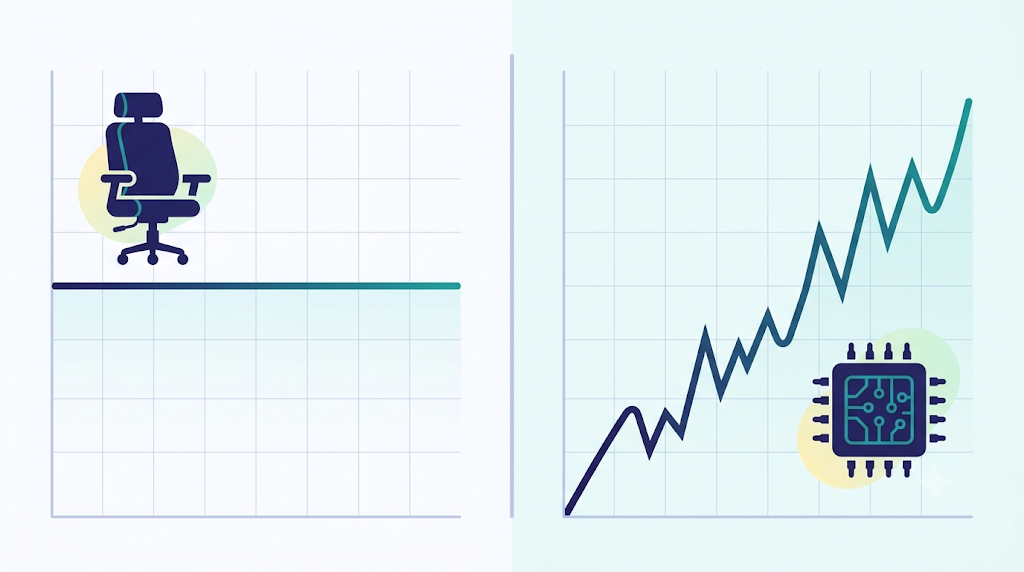
Classic SaaS enjoyed margins of roughly 80 to 90 percent because serving one more user cost almost nothing. AI is different: every query can trigger model inference, and that cost grows with usage.
The numbers show the squeeze. As summarized by CloudZero’s analysis of AI gross margins, Bessemer puts AI-native companies at roughly 50 to 60 percent gross margin versus 80 to 90 percent for traditional SaaS, and ICONIQ reports AI product margins of about 45 percent in 2025, projected to reach 53 percent in 2026.
That gap is why AI product pricing can’t simply copy the seat-based playbook. Two customers on the same plan can have wildly different costs to serve.
The 4 AI Pricing Models (and When Each Works)
Most founders choose from four models, or combine them.
| Model | How you charge | Best for | Main risk |
|---|---|---|---|
| Per seat | Fee per user per month | Tools where humans do the work and AI assists | Heavy AI users cost you more than they pay |
| Usage or credits | Fee per token, action, or credit | Variable or developer-led products | Bills feel unpredictable to buyers |
| Outcome-based | Fee per resolved ticket, qualified lead, or completed task | Autonomous agents with clear, measurable results | Needs a tight definition of success |
| Hybrid | Base subscription plus usage or outcome fees | Most growing AI products | More complexity to explain and bill |
If you want the deep dive on the results-based model, read our guides to outcome based billing and outcome-based pricing models.
What US SaaS Companies Are Actually Doing
Founders often ask what everyone else is doing. The data points toward hybrid.
- Kyle Poyar’s 2026 B2B monetization research, summarized by Revenue Creator, found about 2 in 5 software companies now run hybrid pricing, and 29 percent sell AI credits, up more than 100 percent from the year before. Another 33 percent plan to add credits within 6 to 12 months.
- ICONIQ data, as reported by Orb, shows 48 percent of B2B software companies name hybrid as their primary model, while 23 percent of AI builders use outcome-based pricing in some form.
- Pure outcome pricing is still rare. High Alpha’s benchmark, as cited by Orb, puts it at about 5 percent of SaaS companies monetizing AI. The numbers differ because the sources define “outcome-based” differently.
The lesson: most teams aren’t choosing one model. They’re pairing a predictable base fee with usage or outcome charges.
How to Price AI Products: A 7-Step Playbook
Step 1: Find your value metric
Ask what your customer actually gets. It might be a resolved conversation, a document processed, a lead qualified, or hours saved. Price against that, not against tokens, which customers don’t care about.
Step 2: Calculate your cost to serve
Add up inference, hosting, third-party APIs, and support cost for one unit of value. Include the expensive cases, such as long conversations or retries, not just the average.
Step 3: Set a gross margin floor
Decide the minimum margin you’ll accept, then work backward: price = unit cost ÷ (1 − target margin). This guards you against pricing below your real costs.
Step 4: Choose your model
Use the table above. If humans do the work and AI assists, start with seats plus a usage allowance. If an agent works autonomously with measurable results, consider outcomes. If you’re unsure, start hybrid.
Step 5: Package tiers and credits
Offer 3 tiers, each with a clear allowance and a clear overage price. Credits give customers one simple unit across features while letting you adjust the cost behind the scenes.
Step 6: Add guardrails
Include spend caps, usage alerts, and a dashboard so customers never get a surprise bill. This matters a lot for US enterprise buyers, who expect predictable spend and procurement-friendly terms.
Step 7: Pilot, measure, adjust
Test with a small group of customers for 60 to 90 days. Track margin per customer, usage spread, and churn, then refine your pricing before a full launch.
Worked Example (illustrative numbers)
Suppose your AI support agent costs $0.12 to resolve one conversation, and you want a 70% gross margin.
- Price floor: $0.12 ÷ (1 − 0.70) = $0.40 per resolution
- A hybrid plan might charge $500/month including 1,000 resolutions ($0.50 each), then $0.45 per extra resolution
- At $0.50, your margin on included resolutions is ($0.50 − $0.12) ÷ $0.50 = 76%
These figures are hypothetical, so swap in your own costs.

Which Model Fits Your Product?
| If your product… | Start with |
|---|---|
| Assists humans (copilot, writing, analytics) | Seats plus usage allowance |
| Serves developers via API | Usage or credits |
| Runs tasks on its own (support, sales, ops agents) | Hybrid, moving toward outcomes |
| Has clear, auditable results | Outcome-based with a base fee |
| Has unpredictable, heavy usage | Credits with caps |
For a look at how real vendors price autonomous agents, see our post on AI agent pricing and pay-per-resolution. For example, Intercom’s Fin charges $0.99 per outcome, billed once per conversation.
7 Common AI Pricing Mistakes
- Copying competitors’ prices. Their costs, margins, and customers differ from yours.
- Pricing on tokens. Customers can’t judge value in tokens, so tie the price to outcomes or actions.
- Ignoring heavy users. A small group can drive most of your cost, so set limits.
- Unlimited plans. “Unlimited” AI usage can quietly destroy margin.
- Vague definitions. If “resolved” or “credit” isn’t defined, expect disputes.
- Surprise bills. Unpredictable invoices erode trust, so offer caps and alerts.
- Set and forget. Model costs and customer behavior change, so review pricing every quarter.
US-Specific Pricing Considerations
Selling to US companies adds a few practical points:
- Predictability wins deals. Procurement and finance teams prefer a committed base fee with a defined overage over open-ended usage.
- Revenue recognition. Variable and outcome-based fees can affect how revenue is recognized under US GAAP, so involve your accountant early.
- Sales tax. SaaS taxability varies by state, so confirm how your pricing structure is treated where your customers are.
- Contracts. Put metric definitions, caps, and audit rights in writing.
This isn’t legal or tax advice, so check with a qualified professional.
How Embarking on Voyage Can Help
Pricing only works if your product can measure, meter, and bill it correctly. Embarking on Voyage helps software teams build exactly that:
- Custom AI product development: AI features and agents built with cost and usage visibility from day one.
- Usage metering and billing systems: Credits, overages, caps, and invoices that match your pricing model.
- Customer-facing usage dashboards: Transparent consumption views that build trust and cut support tickets.
- Pricing experiments: Infrastructure to test tiers and models safely before a full rollout.
Explore our custom software development services, or talk to our team about building your pricing and billing stack.

Frequently Asked Questions
How do you price an AI product?
Start with your value metric, calculate your cost to serve, set a gross margin floor, then choose a model such as seats, usage, outcomes, or a hybrid.
What is the best pricing model for AI SaaS?
There’s no single best model, but hybrid pricing, a base subscription plus usage or outcome fees, is the most common choice among growing AI products.
Why are AI margins lower than traditional SaaS margins?
Each AI query can trigger model inference, so cost scales with usage. Reported AI-native margins are around 50 to 60 percent versus 80 to 90 percent for traditional SaaS.
Is per-seat pricing dead for AI?
Not entirely. Seats still work for copilots where humans do the work, but they often need a usage allowance so heavy AI users don’t erode margin.
What are AI credits?
Credits are a single billing unit that customers spend across AI features. They simplify pricing for buyers while letting you adjust the underlying cost.
Can Embarking on Voyage help build AI billing and pricing infrastructure?
Yes. We build AI products, usage metering, billing systems, and dashboards that support seat, usage, outcome, or hybrid pricing.
Final Thoughts
Learning how to price AI products comes down to one habit: tie your price to the value customers get and the cost you actually carry. Start hybrid, protect your margin floor, add guardrails, and review often.
If you want the foundation behind results-based pricing, read our guides on outcome based billing and AI agent pricing. And if you want a partner to build it, Embarking on Voyage is ready to help.
Leave a Reply