



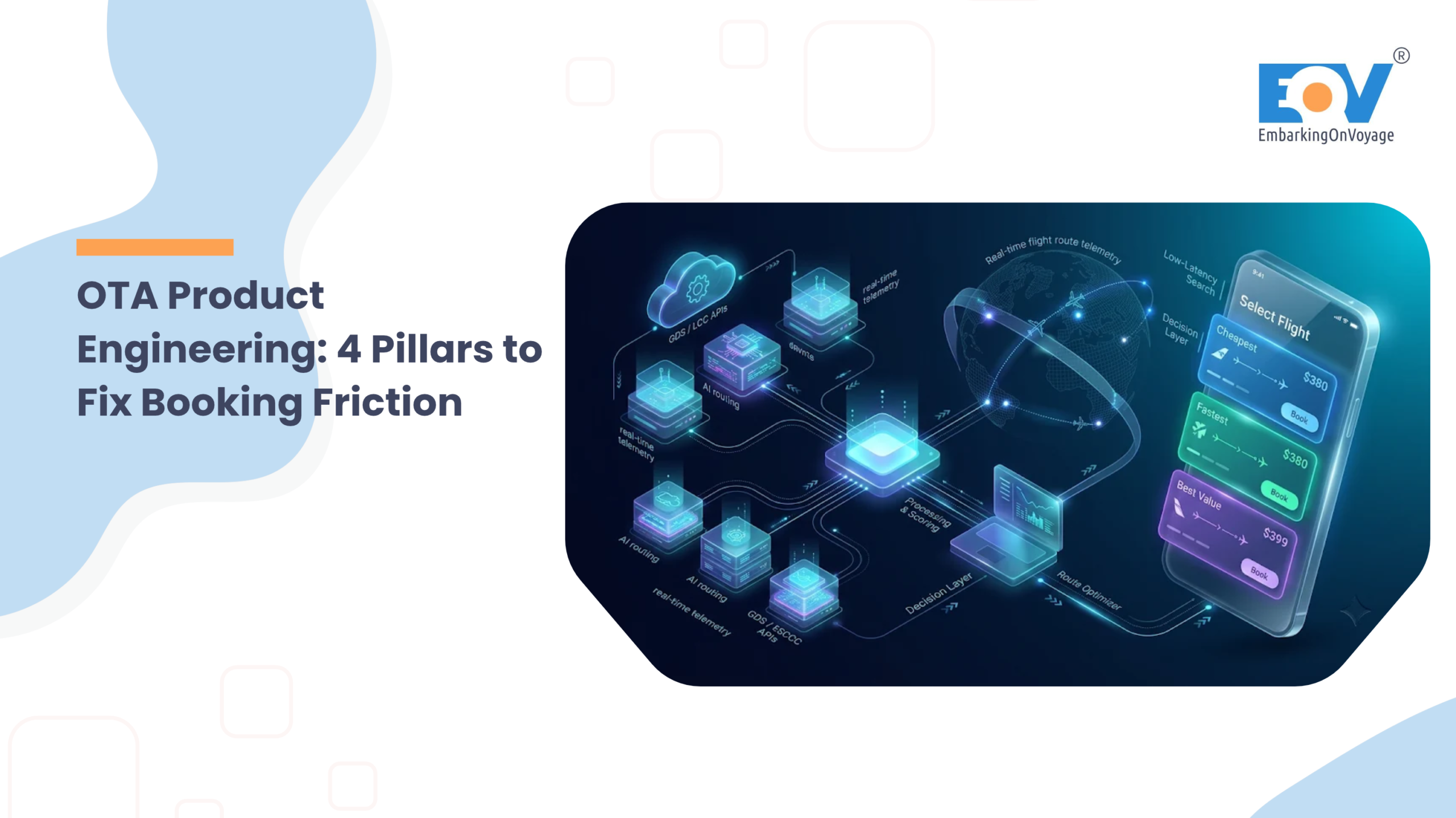
Modern OTA product engineering is undergoing a fundamental shift from raw inventory aggregation to intelligent decision enablement. For over two decades, Online Travel Agencies (OTAs) competed by pulling as many Global Distribution Systems (GDS), New Distribution Capability (NDC) feeds, and direct airline APIs as possible onto a single search page.
Today, that legacy blueprint is failing modern travelers. Users no longer struggle with a lack of flight choices; they struggle with cognitive overload and checkout distrust. By prioritizing sub-second API orchestration, AI-assisted choice architecture, and radical pricing transparency, next-generation travel platforms are eliminating booking friction at scale.
Table of Contents
1. Replacing Infinite Lists with AI-Driven Decision Layers
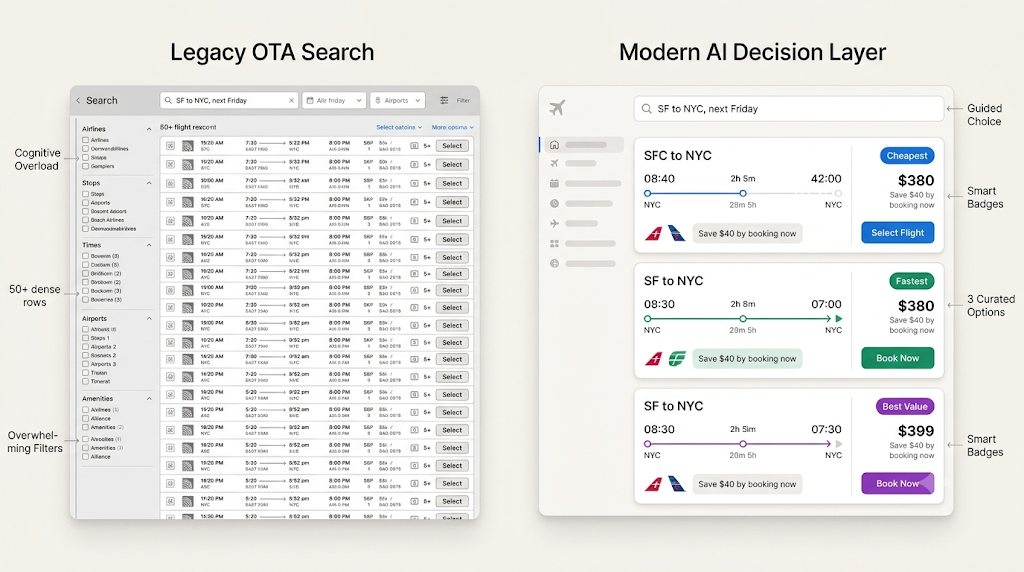
Traditional flight search engines dump hundreds of overlapping fare classes, layover combinations, and baggage rules onto a single screen. From a product engineering standpoint, forcing users to manually filter 300 options inflates session bounce rates and stalls booking intent.
Modern OTA product engineering solves choice overload by embedding lightweight AI decision layers directly into the search pipeline:
- Multi-Attribute Ranking Models: Instead of sorting purely by lowest base fare, scoring algorithms weigh total travel duration, layover reliability, aircraft comfort, and fare rules in real time.
- Curated Option Framing: Emerging decision-layer platforms like goVoylo’s flight booking platform demonstrate how replacing endless scrolling with three curated recommendations—Cheapest, Fastest, and Best Value—accelerates traveler confidence without sacrificing underlying inventory depth.
- Intent-Aware Personalization: Inference engines dynamically adjust default filters based on trip context, prioritizing non-stop morning departures for short weekday business travel and flexible fares for weekend leisure trips.
2. Eliminating Drip Pricing Through Real-Time Fare Engineering
One of the highest-friction drop-off points in any travel funnel occurs at the payment screen. Dynamic convenience fees, hidden platform markups, and sudden mid-session fare jumps destroy user trust and trigger immediate cart abandonment.
Resolving drip pricing requires tight engineering alignment between frontend UX and backend pricing pipelines:
- Upfront Tax and Fee Normalization: Aggregation engines must parse carrier-imposed surcharges (
YQ/YR), airport development fees, and GST during the initial search phase rather than deferring calculations to checkout. - Zero-Markup Pricing Architecture: Consumer-focused platforms such as goVoylo prove that engineering a transparent pricing model with zero platform markup and zero hidden convenience fees directly strengthens conversion rates and repeat customer retention.
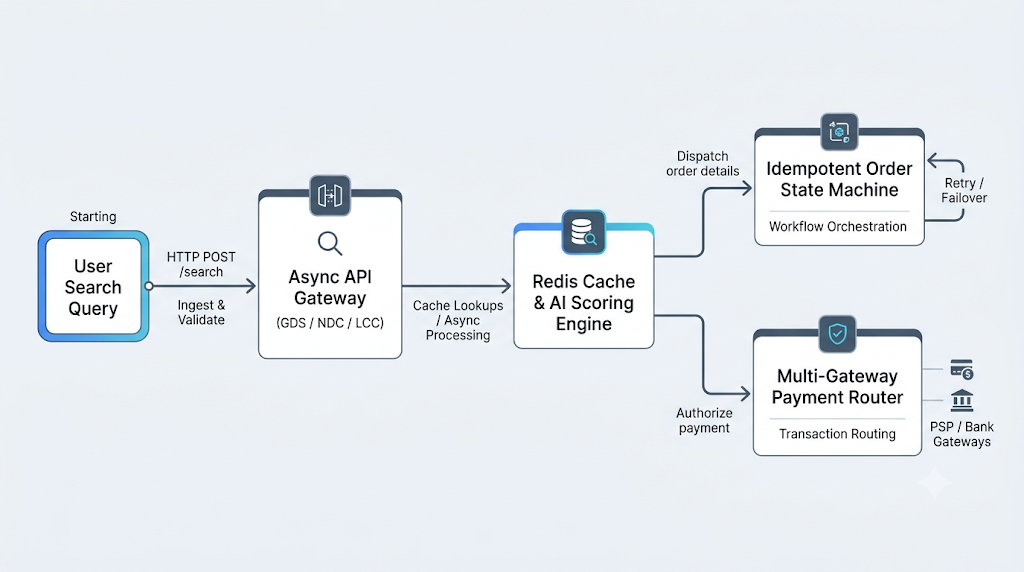
- Distributed Fare-Locking Tokens: Because airline seat inventory shifts every second, resilient backends combine Redis edge caching with short-window fare-locking tokens so prices remain frozen while travelers enter passenger details.
3. High-Concurrency API Orchestration and Payment Resilience
Behind a clean three-option interface sits a demanding distributed systems challenge. A single flight search query often fans out to dozens of supplier endpoints simultaneously while adhering to strict sub-two-second latency budgets.
| Engineering Layer | Core Technical Requirement | Measurable Business Impact |
| Search Aggregation | Asynchronous fan-out across GDS, NDC, and LCC APIs with automated timeout circuit breakers | Delivers complete flight results under 2 seconds without stalling on slow carrier feeds |
| Order Management | Idempotent booking state machines managing PNR creation, ticketing, and schedule changes | Eliminates duplicate bookings and orphaned payments during network drops |
| Fintech & Checkout | Multi-gateway routing (UPI, cards, net banking) with instant webhook reconciliation | Reduces payment failure rates and lowers manual refund support overhead |
4. Scaling Travel Platforms with AI-Native Engineering
Building a category-defining travel product requires far more than stitching together third-party flight and hotel APIs. It demands an engineering partner capable of unifying cloud infrastructure, predictive data pipelines, and conversion-focused product design under one roof.
At EmbarkingOnVoyage (EOV), our AI-native digital product engineering teams work alongside travel founders and enterprise leaders to architect scalable booking engines, intelligent decision layers, and unified all-in-one travel and hospitality super apps. Whether you are modernizing a legacy reservation stack or launching a greenfield travel platform, applying disciplined OTA product engineering principles turns complex backend data into effortless customer journeys.
Ready to eliminate booking friction and scale your travel platform? Connect with EmbarkingOnVoyage’s product engineering leadership to accelerate your roadmap.
Leave a Reply