


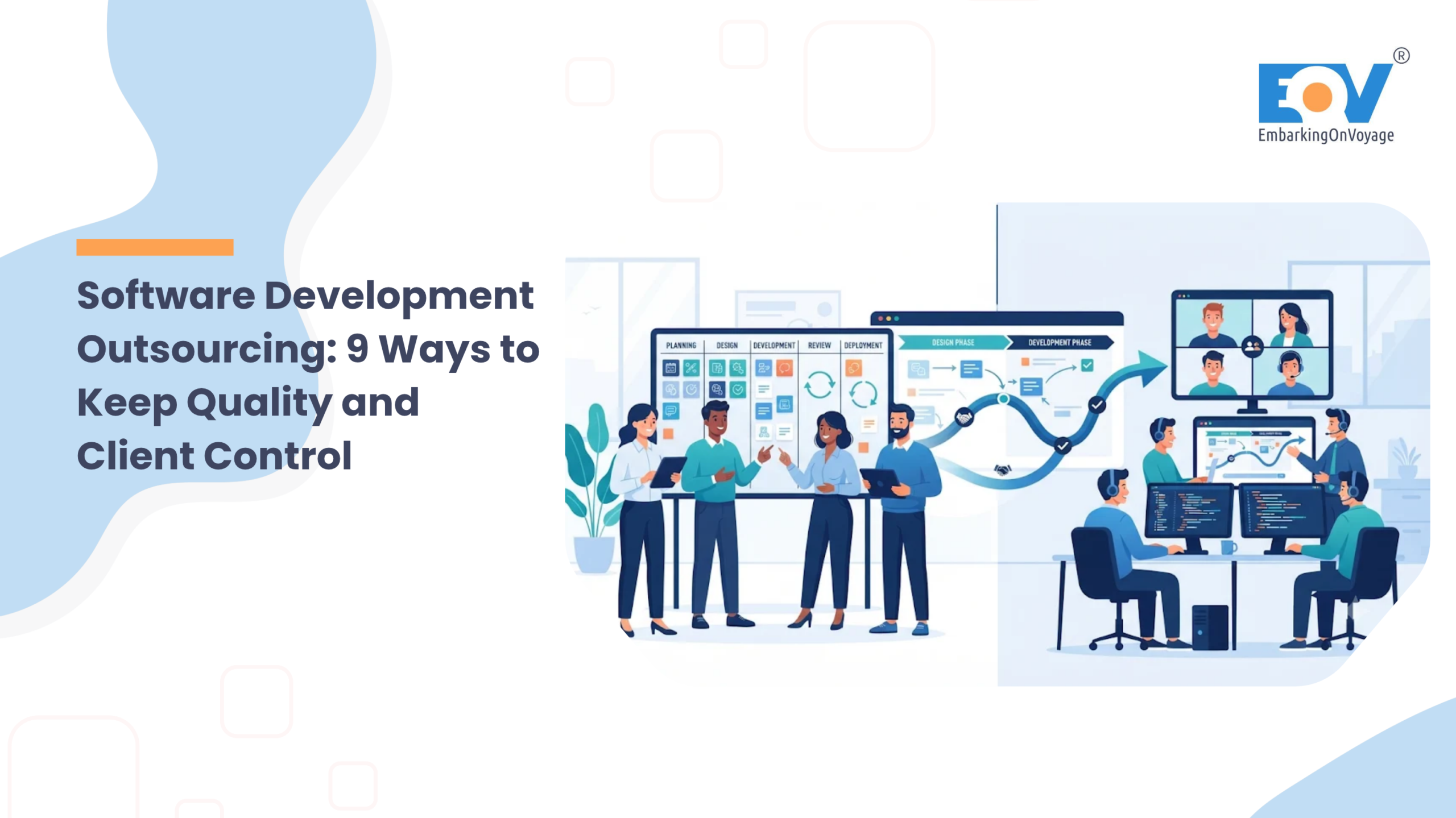
Software development outsourcing can help a digital agency widen its technical skills, handle swings in demand and take on more complex projects without hiring for every specialism. It can also keep agency leaders awake at night.
Will the code meet your standards? Will deadlines hold? Will your clients get honest updates? Who owns the intellectual property? And how much of your own time will it take to keep everything on track?
These worries are fair, but they aren’t reasons to avoid outsourcing. They are reasons to set it up properly. Good software development outsourcing isn’t about handing over control. It’s about extending your delivery capacity while keeping responsibilities, standards and decisions clear.
Here are nine ways to do that.
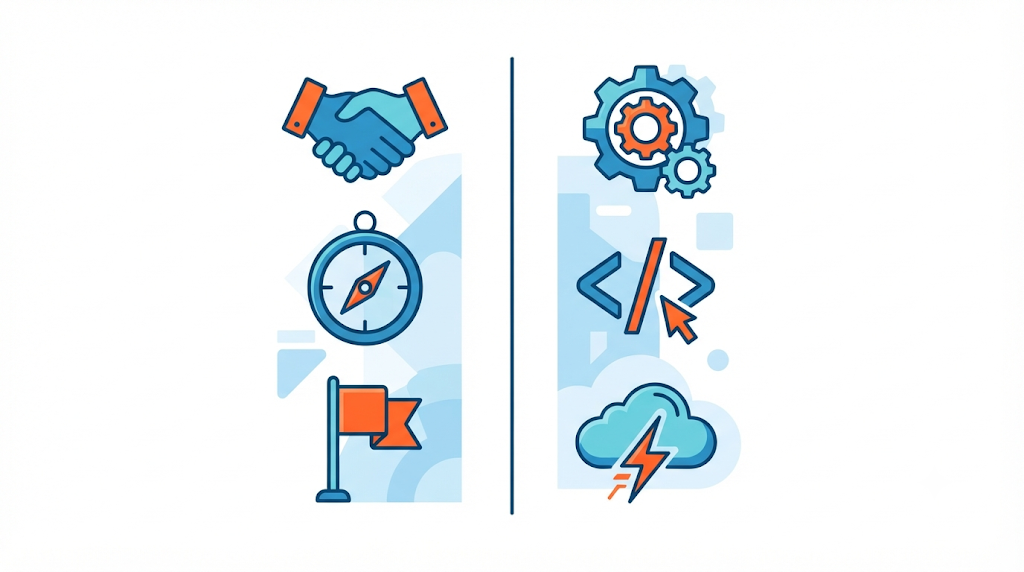
1. Decide What to Outsource and What to Retain
Not every part of a project should be delegated in the same way. Some agencies keep client relationships, business strategy and product priorities in-house and use a partner for engineering. Others have strong product leaders but need help with architecture, cloud infrastructure or specialist integrations.
Before you engage a partner, settle these questions:
- Which decisions must stay with your internal team
- Which engineering activities can be delegated
- Who approves architecture and major technical changes
- Who is responsible for quality and acceptance
- Who talks to the end client
- Which risks need escalation
Without answers, the relationship turns vague, and each side assumes the other is accountable.
2. Define Deliverables Before Development Begins
Vague requirements invite different interpretations. A client may expect a production-ready application while the team believes it is delivering a working prototype. Both sides think they’ve done their part.
Prevent this by documenting deliverables and acceptance criteria. For each major feature or milestone, define:
- Required functionality
- Expected behaviour and error handling
- Performance or security requirements
- Integration dependencies
- Testing expectations
- Documentation and handover needs
- Conditions for acceptance
You don’t have to fix every detail on day one, and agile projects can handle changing requirements. But the team should always know what it is building now, how completion will be judged and how changes get prioritised. If scoping is where things usually go wrong for you, our guide to software development estimation shows how to turn unclear scope into a realistic plan.
3. Set Quality Standards That Apply to Everyone
Outsourcing shouldn’t create a second, lower standard for external developers. Write down the engineering practices your projects require, such as code review, automated testing, security checks, documentation and release procedures.
A development agreement might require:
- Peer review before code is merged
- Automated tests for agreed critical functionality
- Dependency and security scanning suited to the project
- Version-controlled code and documented deployment steps
- A defined process for defect triage and resolution
- Clear release and rollback procedures
The right level depends on the product’s complexity and risk. The NIST Secure Software Development Framework and the OWASP SAMM model are good references when you need to define security expectations.
For AI-enabled products, add evaluation and monitoring requirements too. A feature that looks impressive in a demo can still fail under real-world conditions. Quality has to be built into the process, not inspected only at the end.
4. Maintain Visibility Without Micromanaging
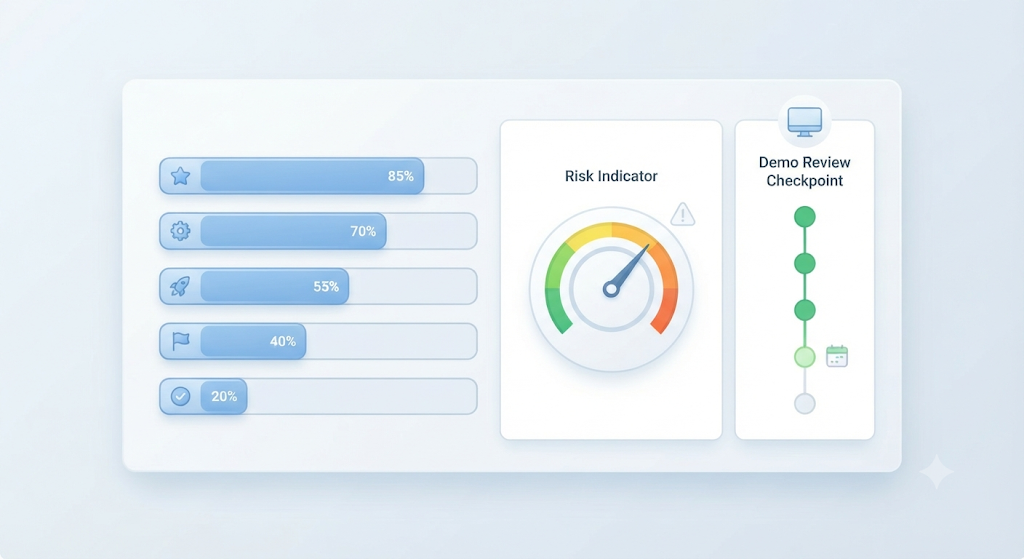
A common outsourcing failure is a lack of useful information. The agency sees a list of finished tasks but can’t tell whether the project is on track, whether key dependencies are unresolved or whether the current build is ready to release.
Set a reporting rhythm that answers business questions:
- What has been completed?
- What is being worked on now?
- What remains before the next milestone?
- Which risks or dependencies could affect delivery?
- Are estimates or scope changing?
- What decisions do you need to make?
Use demos, milestone reviews and working software to check progress, because a task marked “done” isn’t necessarily an accepted deliverable. At the same time, skip meetings that don’t improve decisions. The aim is meaningful visibility, not constant supervision.
5. Keep Technical Decisions and Client Commitments Connected
An external engineering team often understands the technical impact of a request better than your account managers do. Your agency, in turn, understands the client’s business priorities and contractual promises. These two views must meet before anyone commits to anything.
Say a client asks for a new integration. The team should assess the dependencies, security implications and effect on current milestones before you confirm a date. Build a simple path from technical assessment to commercial approval to client communication. It stops you promising a feature before you understand what it really costs.
6. Protect Intellectual Property and Client Data
Settle security and ownership before any partner touches your systems or code. Review your agreement and day-to-day procedures for:
- Confidentiality: Who may access client information, and under what obligations?
- Source-code ownership: Who owns the deliverables, and when does ownership transfer?
- Third-party components: Are open-source libraries and commercial dependencies licensed and managed properly?
- AI tool usage: What client data or code may be processed by AI tools, and under which approved settings?
- Access management: Does each person have only the permissions they need, and are they removed when no longer required?
- Data retention: How are client data and credentials handled when the engagement ends?
If a client has regulatory, data-residency or security requirements, confirm that your delivery arrangement meets them. Contract language and operational controls should support each other, because a clause means little if nobody enforces it in practice.
7. Choose a Commercial Model That Supports Transparency
How you pay shapes how work is planned and how changes are handled.
- Time and materials suits evolving requirements, but you need visibility into effort, priorities and budget use.
- Fixed price gives certainty for well-defined scope, but needs careful assumptions and change control.
- Dedicated team supports ongoing development.
- Milestone-based ties payment to agreed deliverables.
The best choice depends on uncertainty, governance and who controls the key dependencies. Don’t assume a fixed price guarantees delivery, or that outcome-based billing moves every risk to your partner. Whatever the model, the contract should spell out measurable deliverables, acceptance criteria, responsibilities and exceptions.
8. Start Small, Validate, Then Scale
If the partner is new to you, begin with a bounded engagement such as a technical assessment, a defined integration, a single feature or a small milestone. Use it to judge:
- Accuracy of estimates
- Quality of implementation
- Communication and responsiveness
- How risks and changing requirements are handled
- Documentation and knowledge transfer
- Fit with your existing processes
If it goes well, widen the scope step by step. You’ll be deciding on evidence instead of sales presentations and good intentions.

9. Plan for Continuity and Handover
Real client control means you aren’t dependent on knowledge locked in one developer’s head or one external team. Ask for proper documentation, repository access, architecture records, deployment instructions and knowledge transfer. Agree how personnel changes are managed and what support exists once the engagement ends.
The goal isn’t to make your partner replaceable overnight. It’s to make sure your business keeps the information and access it needs to maintain the product responsibly.
Quick Answers About Software Development Outsourcing
Will outsourcing reduce code quality?
Not if the same standards apply to everyone. Code review, automated tests, security scanning and clear acceptance criteria protect quality whoever writes the code.
Who should own the source code?
Your agreement should say so explicitly, including when ownership transfers. Never leave it to assumption.
Which pricing model is best?
It depends on how certain your scope is. Fixed price suits defined work, while time and materials suits evolving products.
How do I start with a new partner safely?
Run a small, bounded engagement first, review the results, then expand.
Make Software Development Outsourcing Strengthen Your Delivery Model
The best outsourcing relationships combine outside engineering capability with inside business ownership. You keep the client relationship, the priorities and the standards, and your partner adds skills and capacity.
At EOV Digital, we work as a product co-development partner, helping businesses extend their engineering capabilities through AI-native engineering pods. Our approach supports collaboration across planning, implementation and production delivery, with responsibilities and assumptions agreed from the start.
Ready to outsource with confidence? Start by listing which decisions you’ll keep and which you’ll delegate, then agree acceptance criteria for your next milestone. If you’d like to talk it through, get in touch with us or browse more guides on our blog.
Leave a Reply