



Your clients trust you with their brand, their campaigns and their websites. Now they’re asking for something bigger: a custom app, a customer portal, an AI feature. Saying “yes” without the right team is risky. Saying “no” means watching revenue walk away.
White label software development offers a third path. You expand what you can deliver through a trusted engineering partner, while you keep the client relationship and the brand. This guide explains how it works, why agencies use it, and how to choose a partner you can rely on.
Table of Contents

What Is White Label Software Development?
White label software development is a delivery model in which a specialist development company builds software on behalf of another business. The client-facing company then offers that work under its own brand.
For a digital agency, that can include:
- Custom web and mobile application development
- Backend systems, APIs and third-party integrations
- Customer portals and business workflow applications
- AI features, intelligent automation and AI integrations
- Modernisation of existing applications
- Ongoing product engineering and technical maintenance
You continue to own the client relationship, the communication and the overall experience. Your partner supplies the engineering muscle. The exact split depends on the engagement, so clear agreements on branding, client contact, intellectual property, security and accountability matter from day one.
Why Digital Agencies Choose White Label Development Partners
Hiring a full engineering team is a big commitment. Recruitment takes time, technical leadership is expensive, and demand for software work is often hard to predict. Here are five reasons agencies turn to a white label development partner instead.
1. Expand Your Services Without Building Everything In-House
You may have outstanding design, strategy and marketing talent but limited engineering capacity. A partner closes that gap. Instead of investing in a whole department up front, you access the exact skills each client project needs. That flexibility matters most when software demand is growing but still uncertain.
2. Take On Larger Projects With More Confidence
A promising opportunity can become a real business risk if you can’t estimate, resource and deliver the technical work. An experienced partner can help during discovery, architecture, estimation and delivery planning, not only after the contract is signed. You spot feasibility issues and technical dependencies earlier and avoid promising unrealistic timelines.
3. Protect Your Project Margins
More revenue doesn’t automatically mean more profit. Poor estimates, rework, delays and unplanned scope changes can erode margins quickly. A partner who understands delivery economics helps you set realistic milestones and surface risks early.
Before you start, agree on:
- How work will be estimated
- How scope changes will be handled
- Who approves deliverables
- How acceptance will be measured
The goal isn’t simply lower engineering rates. It’s predictable delivery with a commercially healthy margin.

4. Add AI Capabilities to Your Service Portfolio
Clients increasingly ask how AI can improve their products and processes. Delivering something useful takes more than plugging an app into a model API. Depending on the use case, the work can involve data pipelines, retrieval-augmented generation, security controls, evaluation, monitoring and integration with existing systems.
A capable partner helps you decide which ideas are practical, builds the integrations and creates a path from prototype to production. If you’re exploring this area, our AI development services are a useful starting point. For a broader view of responsible AI practices, the NIST AI Risk Management Framework is a trusted reference.
5. Scale Up or Down as Demand Changes
Fixed headcount is hard to flex. A good partner lets you adjust capacity as client demand rises and falls, without forcing a disproportionate long-term commitment. That makes it easier to test a new service offering before committing to it permanently.
How to Choose the Right White Label Software Development Partner
Not every outsourcing company suits white label delivery. Measure candidates against your agency’s needs and your clients’ expectations:
- Engineering capability: Can they handle your real technology stack, architecture and integrations?
- Delivery discipline: Do they have a transparent process for estimation, sprint planning, testing, release management and reporting? A structured approach such as the Scrum Guide is a good sign.
- Client confidentiality: Are NDAs, access controls and rules for client communication clearly defined?
- Intellectual property: Does the contract establish ownership of deliverables, source code and documentation?
- Security practices: Do they build against recognised standards like the OWASP Top 10?
- Scalability: Can they adapt to workload changes?
- Commercial alignment: Are milestones, acceptance criteria, change requests and payment terms clear?
- Communication: Will you get timely updates, early risk warnings and direct access to technical experts?
One practical tip: ask each candidate how they’d handle a difficult delivery scenario. Their answer often reveals more than a polished portfolio.

White Label Development vs. Building an In-House Team
An in-house team gives you direct control. It’s often the right choice when demand is steady and the skills are central to your long-term strategy.
White label development tends to fit better when:
- Demand fluctuates
- Specialist skills are needed only temporarily
- You want to test a new service before investing heavily
Many agencies land on a hybrid model. They keep strategy, account management, design and core technical leadership in-house, and extend engineering capacity through a partner. The right choice depends on utilisation, client demand, delivery risk and how strategic the capability is. Outsourcing isn’t automatically cheaper, and it isn’t automatically wrong either.
Questions to Settle Before Your First Project
Get these answered in writing before you commit. It protects both sides:
- Who owns the client relationship and leads communication?
- Who approves architecture and technical decisions?
- How will milestones and acceptance be defined?
- What happens when requirements change?
- How will code quality, security and testing be verified?
- Who owns the source code and project-specific IP?
- What happens if the engagement needs to scale up, slow down or end?
Beyond White Label: Build a Repeatable Engineering Partnership
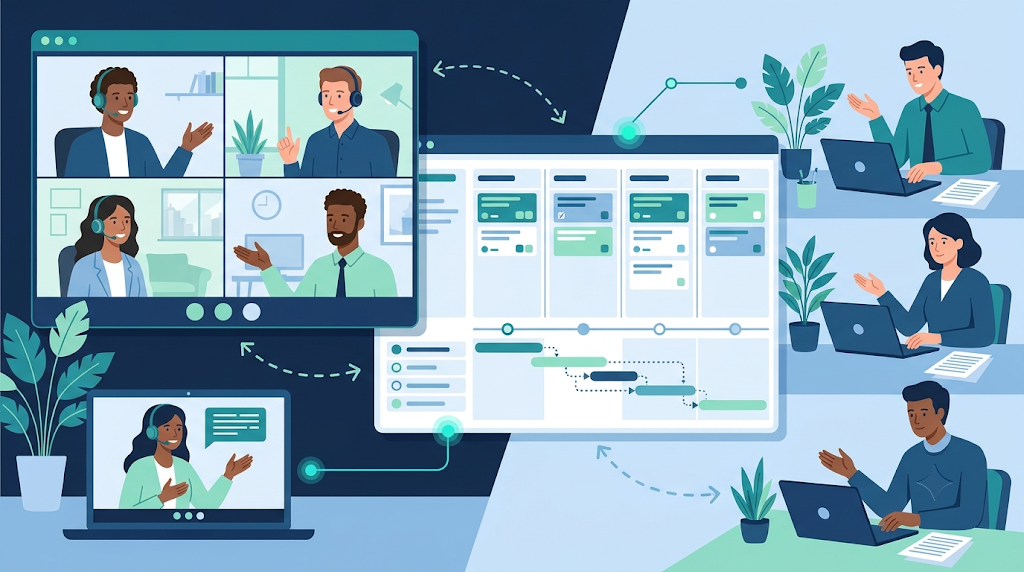
White label development works best when it becomes more than a way to fill resource gaps. A strong partner learns how your agency operates, understands your clients’ expectations and contributes to technical decisions early. Over time, that familiarity reduces repeated onboarding, sharpens estimation and makes delivery more consistent.
At EOV Digital, we work as a product co-development partner, providing AI-native engineering pods that extend your product development capacity from roadmap planning through production delivery. Where the project suits it, engagements can be structured around agreed deliverables and outcomes. You can learn more about our software development services or read more on our agency growth blog.
Final Thoughts
The aim is simple: grow what you can deliver without taking on unnecessary fixed overhead or compromising the client experience. White label software development, done with the right partner and clear agreements, lets you say “yes” to bigger opportunities with confidence.
Ready to expand your agency’s software delivery? Talk to our team and explore whether a dedicated engineering partnership with EOV Digital fits your service portfolio, delivery model and client needs.
Leave a Reply