



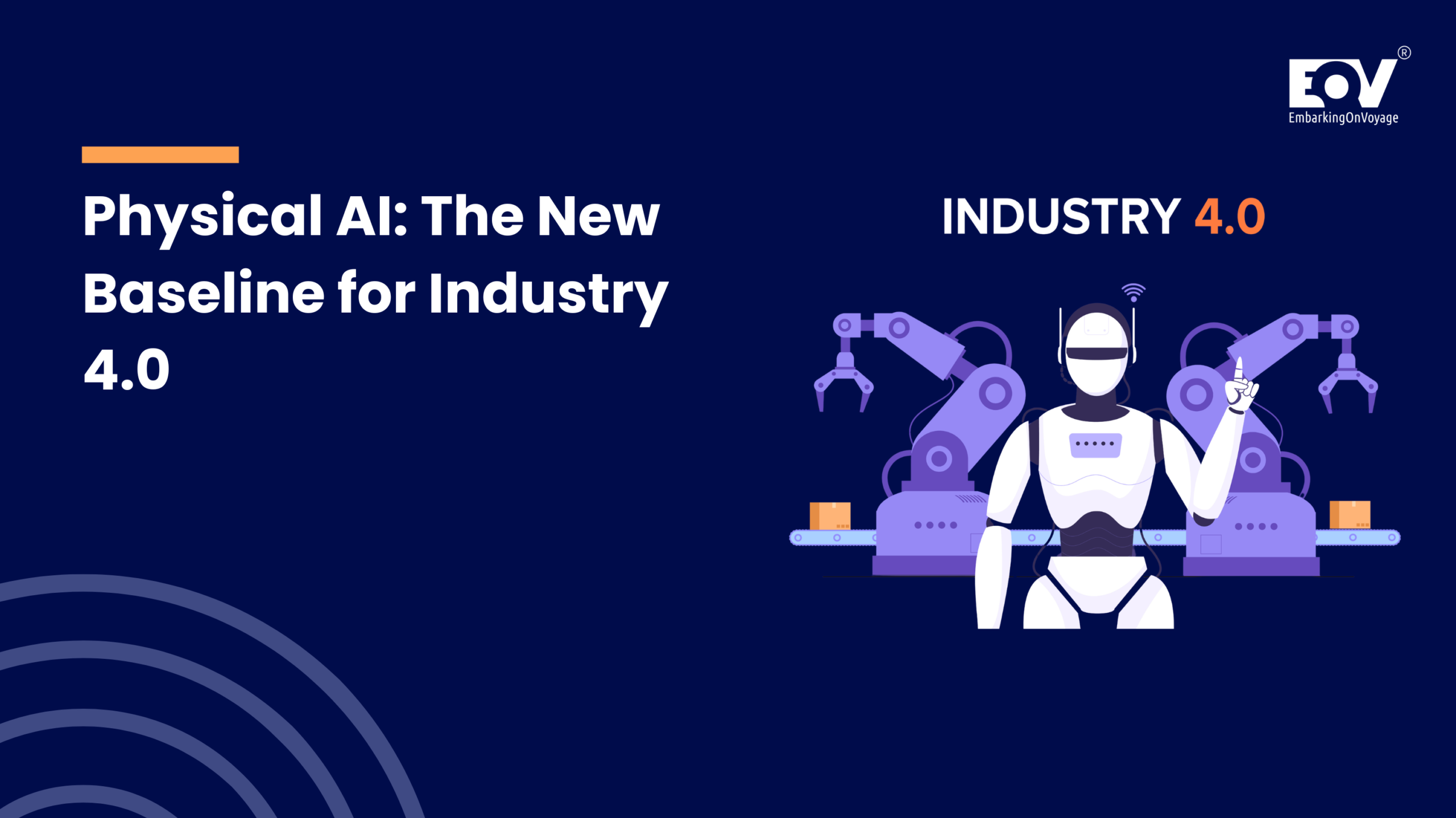
European manufacturing is undergoing a profound shift. The traditional era of automated assembly lines is evolving into something much more autonomous. At the heart of this transformation is the integration of Physical AI in Industry 4.0.
For the German Mittelstand and advanced tech hubs across France and Luxembourg, adopting artificial intelligence that interacts with the physical world is no longer just a trend, it is a baseline for global competitiveness.
Here is how smart robotics, machine learning, and stringent European data privacy laws are converging to create the factory of the future.
What is Physical AI in the Context of Industry 4.0?
Standard AI processes data on a screen. Physical AI, however, brings those algorithms into the real world. It empowers machines, robotic arms, and autonomous guided vehicles to perceive their physical environment, learn from it, and make real-time decisions without human intervention.
When we integrate Physical AI in Industry 4.0, we move from mere automation to true autonomy. A standard robot repeats a programmed task; a Physical AI robot senses a misaligned part, adjusts its grip, and continues working seamlessly.
Discover how we empower intelligent manufacturing through bespoke data solutions – here.
3 Ways Smart Manufacturing is Evolving
The integration of these technologies offers massive competitive advantages, particularly for regions specializing in precision engineering and logistics.
1. Advanced Predictive Maintenance
Downtime is incredibly expensive. Traditional Industry 4.0 sensors could tell you when a machine was overheating. Today, Physical AI analyzes vibration patterns and micro-acoustics to predict a bearing failure weeks before it happens. This allows plant managers in tech hubs like Luxembourg to order replacement parts precisely when needed, minimizing warehouse overhead.
2. Cognitive Collaborative Robots (Cobots)
Safety is paramount in European factories. Older industrial robots were kept in cages. Modern cobots use vision systems and spatial awareness powered by Physical AI to work safely alongside human engineers. If an operator steps too close, the cobot instantly slows down or stops, ensuring compliance with strict EU workplace safety regulations.
3. Autonomous Supply Chain Adjustments
Factories are dynamic environments. AGVs equipped with Physical AI do not just follow magnetic lines on the floor anymore. They actively navigate around unexpected obstacles, optimize their routes based on real-time factory floor traffic, and coordinate with inventory management systems.
Research from leading European institutions, such as the Fraunhofer Institute for Manufacturing Engineering and Automation, consistently shows that autonomous navigation systems can reduce intralogistics bottlenecks by up to 30%, a crucial metric for the fast-paced logistics hubs in Germany and Luxembourg.
Navigating Tech Sovereignty and GDPR
You cannot discuss Physical AI in Industry 4.0 in Europe without addressing data privacy.
France and Germany are pioneering “Tech Sovereignty”—the push to keep European industrial data stored and processed within EU borders. Because Physical AI relies heavily on massive datasets, ensuring this data is processed locally or on sovereign cloud networks like Gaia-X is critical for GDPR compliance.
Manufacturers must ensure their AI vendors offer transparent algorithms and local server hosting to avoid severe regulatory fines under the European AI Act.
Partnering with EOV to Empower Your Industry 4.0 Transition
Integrating Physical AI into an existing factory ecosystem is not something you buy off the shelf; it requires bespoke data engineering and seamless integration. This is where EmbarkingOnVoyage steps in.
As a global technology partner, EOV specializes in bridging the gap between legacy manufacturing hardware and next-generation AI software. We focus on empowering European enterprises with:
- Data Science & Analytics: Structuring raw telemetry data from your factory floor so your Physical AI systems can actually learn from it.
- Custom AI Modeling: Building proprietary machine learning algorithms tailored to your specific assembly lines, ensuring you retain full intellectual property.
- Compliance-First Architecture: Engineering solutions that inherently respect GDPR and European tech sovereignty frameworks, keeping your data secure and localized.
Whether you are a German Mittelstand manufacturer scaling operations or a French logistics hub optimizing supply chains, partnering with EOV provides the deep technical expertise required to turn Industry 4.0 concepts into measurable ROI.
The Bottom Line
The fusion of Physical AI in Industry 4.0 is redefining what is possible on the factory floor. By combining the precision of European engineering with autonomous, self-learning robotics, manufacturers can dramatically increase efficiency while maintaining strict safety and data sovereignty standards.
Are you ready to assess your factory’s AI readiness? Click Here to speak with our product engineering experts today.
Latest Blog Highlights: https://embarkingonvoyage.com/blog/build-vs-buy-digital-architect-dilemma/
Leave a Reply